Tampilkan postingan dengan label Random. Tampilkan semua postingan

Kamis, 16 April 2015

Help Wanted: RPG Settings that Would Make Awesome Wargames

I'm not a huge RPGer.  Whilst I dabble in them on PC my interest in pen-and-paper RPGs is almost non existent.  However they do attract very imaginative world builders who create amazing settings.

I'm vaguely aware over the last decade there's been a bit of an explosion of smaller, indie RPGs with interesting mechanics and settings.  But I've never bothered to go down the rabbit hole, and sift through the terribly written fanfics (aka fluff) and sometimes-inspired-but-often-awful rules to look for the gems.

I'm looking for readers to help me out.  I'm looking for RPG settings that are interesting, and preferably original/a fresh take on a genre.  Specifically, settings that would adapt well to a wargame.

Can you provide the title, a link, a description of what it is, and if you know of any rules/minis that would fit the setting.

Here's an example of a helpful comment:

The Savage World of Solomon Kane
https://www.peginc.com/product-category/savage-world-solomon-kane/

It's based on the Howard books about a puritan witch hunter who fights pirates, witchdoctors, lost tribes, undead, monsters and basically any other occult/cool stuff in about the 18th century. 

You could simply use the Savage Worlds rules as they play pretty fast.  LOTR could be modded.  Song of Blades and Heroes or the Four Colour rules would probably work well. You can use pretty much any historical models like those from Blue Moon in 15mm or Old Glory 28mm, and simply modify a Warhammer witch-hunter for the main hero. Would be a fun campaign game.  May suit the 2HW narrative style rules. 

You don't have to be as detailed as this, but you get the idea.

You can pick any genre or era - it's unrestricted.  However there MUST be miniatures to play it.  You favourite RPG with octopus-armed cat cyborgs is useless, unless octopus-armed cat cyborg miniatures are available.

Our communal hunt for free rules was pretty successful and I'm confident we'll unearth some good stuff. Come out, closet RPG nerds - now is your hour!

Senin, 13 April 2015

Thanks to the Readers!

...or perhaps more specifically, the active commentors.

I was doing my usual trawl through comments looking for spam, and was struck with the quality of the comments (and relatively high quantity, too, for such a small blog).

There's some very interesting ideas, suggestions, mechanics, nuggets of wisdom, heck even embryo game ideas - it combines to make the comments an interesting read (arguably more interesting than the posts that trigger them!)  Perhaps I should do a "best of" compilation sometime!

Anyway, thanks to the "commentors"  - you add a lot to the blog - you're appreciated!


Selasa, 10 Maret 2015

Halo Wargames (Spartan Games)

So, Spartan Games is making spaceship and ground combat games based on the Halo universe.

First reaction: Heh, Spartan Games is making Halo. How apt!
Second reaction: Nooooooooooooooooooooooooooooooooooooooooo

Why the negativity?  Well, I do like Spartan Games as a company.  The interactions I have had with them have impressed me with their courtesy and service.  I also like the idea of a small company successfully growing and carving out a niche in the wargaming world.

However, their rules suck.   And they use the same rules for every game system they have ever put out.  Someone needs to tell them - their rules aren't that good! Certainly not worth copying repeatedly...

People play their games because of the genre (Firestorm Armada was the only supported space game out there until FFG arrived a year ago, Uncharted Seas is fantasy naval - basically inheriting the nostalgia/goodwill from the long defunct Man O'War - and Dystopian Wars has ridden the steampunk craze as pretty much the only offering in 3mm).  People aren't playing their games for their rules.

Given their track record so far, it is hard to imagine Halo (both space and ground) being anything other than a carbon copy of Dystopian Wars/Firestorm Armada/Uncharted Seas with Halo models.

Basically, the Firestorm engine reminds me of an attempt to copy the Battlefleet Gothic engine with all the good bits stripped out and replaced with worse bits.  (Yes, I know Uncharted came first, but it has no direct comparison/competitor)

Let's compare:

Battlefleet Gothic
Buckets of dice (....if you like that sort of thing)
+Blast markers both add "terrain"and damage effects that look nice
+Order system has risk-reward and allows ships to be set in one of 6 "modes"
+Crew skills actually matter
+Torpedoes move unguided across the table, acting as extra terrain/hazard
+Less record keeping than your average space game
 Unique ornate, baroque ships - ridiculously large because of game universe (OK, I guess)
WW1 in space feel because of game universe (fair enough)
Firestorm Armada
-Increases the buckets of dice with even more dice... ...ok this is getting silly
-Adds exploding d6s to boot (extra randomness, yay!)
-No blast markers or "terrain"
-Replaces orders system with random card deck you have to buy separately
 -Crew are simply extra damage tracking
-Torpedoes simply act as guns you can intercept with extra dice roll "saves"
+Less record keeping than your average space game
 -Ridiculously large, bland, generic ships.... ....size chosen because of BFG? (There's something ridiculous about seeing normal spaceships move less than their length).  Generic spaceships are very bland (I could scratch build more interesting ships with a hobby knife, glue and some erasers)


Firestorm Armada emphasizes the more annoying qualities of BFG (huge models vs small movement, buckets of dice) whilst removing the good (blast markers and crew orders added flavour and depth); even whilst freed from the justification of fitting Warhammer's universe. 

--------------------------------

Can you have fun with Firestorm Armada? Sure. I can also have fun playing Yahtzee, if I'm in the mood.   And that's what Firestorm Armada feels like.  Push all your models into the centre of the table and chug handfuls of dice, hoping for 6s.  Tactics, smactics.  Who needs 'em?

If all you seek is a reason to mindlessly push models around the table; then you'll love the chance to do the same in the Halo universe.  But if you aspire to more in your gaming (I.e. you actually like using tactics and outsmarting your enemies rather than victory-through-rolling 6s) then Spartan's mindless rules copy-and-paste might leave you cold.

Oh well, there's always Dropfleet Commander - here's hoping they do something original and good. 

Sabtu, 07 Maret 2015

Gaming: Justifying the Cost (//RANT Warning//)

I've come across this a fair bit in forum posts and in blogs.  Someone suggests the price for a product is unreasonable, then others rush to defend it.

I noticed this recently on a free-to-play (lol) PC game called "Mechwarrior Online." The game, which was crowd funded, continues to milk consumers by selling digital "mechs."  These are solid in "packages" as "early access."  The packages are $55 for a single mech, or up to $240 for 10.

That's right -  $55 for what is essentially a in-game character.  A collection of code and textures, in a game with only 10 small maps (arenas.)

For non-videogamers, $55 is more than a complete FULL GAME of huge PC classics like Skyrim Civilization V, Grand Theft Auto, Dark Souls, and Assassin's Creed.  Those games have many times (100s of times, in some cases) more content than the entire MW:Online game, let alone a single mech.

Naturally, these "paid only" mechs are more powerful than the other mechs, so players are effectively paying for a gameplay advantage (exclusive access to superior equipment) which lasts up to 6 months.   Furthermore, the really powerful mechs are restricted to more expensive packages ($180+). 

Not surprisingly, this business practice (paying to win, and ridiculously overpriced content) has people criticizing it. But what surprises me is the people (those who did purchase it) rushing to defend it. The people who dared complain were attacked and quickly shouted down by "fans."

I see their arguments justifying price cropping up all the time in reference to wargames as well, so let's review some:

Let's call this The Idiot's Guide to Justifying Price

#1.  One handy way to refute the 'overpriced' argument: make a personal attack on the person making the complaints.  This should refer to their socioecomonic status.
-Bonus for ridiculing their social skills/making half hidden racial slurs
"Get a job and move out of your mom's basement"
"People on welfare shouldn't be allowed to post" 
"You're a freeloader who expects everything to be free"
"Maybe it's a big deal if you only make $5 an hour in Guatemala" 

Not only does this put the whiner in their place, it discourages others from having the temerity to question pricing or your own financial decisions.  After all, by specifically questioning your purchase, they attacked you first, right?

#2.  Next, boast about how awesome you are or what a great job you have. 
"I make $1000 a day on construction."
"I own my own business and $240 is what I make in an hour."
-Preferably, at the same time, make yourself the long suffering victim
"If it wasn't for paying players like me, free loaders like you couldn't play."
"If it wasn't for me, this game wouldn't be developed/supported." 

This helps them understand why the pricing is OK.  If it's OK for you, it should be OK for them. $80 for six plastic 28mm minis is fine.  $55 for a digital character in a game is fine. Who do they think they are, anyway?

#3.  Compare the price of the object to something totally unrelated.  
 "I spend $50 on the movies, so the $50 I spent on 2 finecraft models is totally worth it." 
-Bonus points if it is drug or alcohol related.
"I spend more than $300 on a night out on grog, so $500 for a Warhammer army is cheap"

This also reinforces how cool you are, for the benefit of those unlucky whose lives and decision making is not weighed against/or enhanced with the consumption drugs/alcohol. This also shows your superior grasp of economics. I mean, if you can afford to drop $300 on booze every Friday you must be a smart guy, right?

#4.  Claim to do it as you are "supporting" the company.  
-This should be a enormous multimillion dollar company that desperately "needs"support.
-Preferably at the same time, combine this with a complaint.
"I do think the minis are overpriced at $15 each, but I want to support the company."
"I'll pre-order the game to support it's development, even if the alpha rules are crap and I don't like the current model range." 

And people wonder why companies feel free to peddle any rubbish at whatever prices they wish.
Please, encourage and support mediocrity.  Those multinationals really need this sort of support.

#5.  Defend the 'overpriced' model with an irrelevant argument, i.e. your 'enjoyment' is worth it"I've spent $2000 on the game, but it's worth it to me as it's the only game I play."
"I don't have any other hobbies, so dropping $1500 on a 40K army is worth it."

This one is harder to refute, but for example in the "Train Simulator" PC game, to "buy" (or rather unlock) all the trains and tracks would cost $4000+ dollars.

To "buy" a digital train costs $20. Yes, $20 for a digital train that is just a bunch of sprites and code.
To buy a "route" (a single train line of say 100km) costs $40.

So if you think to buy a "full game" of trains is worth $4000, I guess I can't argue.  It's your opinion.
However in the minds of most sane people, paying $4000 for a videogame is vastly overpriced, given you can get fullgames with 10x more content for the industry-standard $20-$80.

So whilst we cannot refute your claim it is "worth it" to you, I do think it's fair we can claim you are an idiot for paying 80x more than the industry standard, for an inferior product. 

To make a wargame comparison, if Perry Miniatures sell plastic models at $30 for 40 (75c each), and Games Workshop sell models sculpted by the same sculptors, to an equal (arguably inferior) standard at $12 for $36 ($3ea) - i.e. four times more. 

Claiming it's "worth it to me" does not alter the original contention - the minis are overpriced.

#6. If all else fails, disarm us with honesty
 "This game/model is ridiculously overpriced, but I'm going to buy them all anyway." 
"I was really disappointed with the release of x model, but I'll still pre-ordering the next release."
-To do this right, you need to complain about the price,complain about the company, admit the shortcomings in the product, then slavishly pledge to continue buying the product

People need to show loyalty to a company.  After all, the company listens and is loyal to you, their valued customer, right?  People need to understand that everything has a price.  And the shinier the toy, the higher the price. Man up, and pay what you need to pay for your plastic/digital crack. 

Napoleonics are Boring - aka - Transitional Periods in Warfare

I was thinking about my wargame interests, and how I found Napoleonic (and ACW) of such little interest compared to most gamers.  On reflection, I think I am attracted to "transitional" periods of warfare.

This is when a new technology has turned warfare on its head, and everyone is experimenting.  All sorts of weird and wonderful ideas are tried out.

---

1950-60s Jet Era is fun
This was what got me thinking about this topic.  A visit to the nearby Caloundra Air Museum confirmed this as a favourite period. The early jet era was so darn interesting.   Missiles could be wire guided, or heat seekers, or radar guided - heck sometimes they simply fired salvoes of dozens of unguided rockets in hope of hitting something.  My favourite - an unguided nuclear rocket. That's right - the AIR-2 Genie was a 1.5kt warhead fired in the 'approximate direction' of enemy bombers.  With a range of about 6 miles, it had a 300m lethal radius - although I bet it would cause anyone within miles to poop their pants!  With awesome cannons you can fit your arm into, these early jets have such primitive controls - going 900kph in using controls not much different than a early-war Spitfire.  It's such a fun mix of designs.  The weird P-38-style twin booms, fighters with twin engines underwing like Meteors, F-104 pointy noses contrasting with gaping blunt Mig-15 air intakes.  Delta wings, swept wings, straight wings.  Sometimes crew sat behind each other - sometimes side by side. You want to fit in a radar?  Simply add a metre of metal cylinder and stretch the nose.   You can tell the designers were really making it up as they went along.  Even the paint schemes are colourful - or just bare metal. 

Modern Air Combat is dull
For the modern era (1980s-) aircraft are so boring by contrast.  NATO and Russian aircraft look pretty similar.  Most have two engines.  Most have two tail fins. All have swept wings.  Most carry a pretty standard loadout - a single gatling-style cannon, a pair of heat seekers and several radar guided missiles.  Paint schemes are a subdued grey.  The biggest difference tends to be the electronics/radar - the stuff that is under the hood anyways.   (It's no coincidence, my favourite "modern" aircraft, the 70s-era A-10, rips up the rule book a fair bit!)  Aircraft, no matter who makes them, are getting more and more alike.  The technology is relatively mature, and hasn't changed a lot since the 70s-80s.  (Yes, I guess there is "stealth" but it isn't that widespread, and all the stealth fighters are clones of each other as well).

---

Early Renaissance is fun
You have pike, musketeers, aquebusiers, crossbowmen, halberdiers, sword-and-buckler men, cannon in a range of shapes and sizes.  Units are mixed in a range of ways and ratios.  You have cavalry in an equally wide range of varieties - dragoons, reiters, hussars, cuirassiers, harquebusiers, etc.  There is a glorious mish-mash of colourful and varied units.  Armour is still a "thing" and units wear varying amounts and types.   You can also go cool places - and fight foes as varied as Indians, Aztecs, Ottomans, or Africans. 

Napoleonics is dull
In contrast, Napoleonics seem pretty boring. It's mostly the pretty uniforms.  The technology and tactics of the muzzle-loading musket is quite "mature"and polished by now.  Everything is so "standardised" in comparison to the early days of gunpoweder.  You can get infantry, cavalry and cannon, and the main difference is the red or blue uniforms. For ACW, simply substitute the uniform colour to grey and blue.  That's why historical gamers from that era tend to be fussy (aka anal-retentive) about uniform - ' cos it's the only interesting thing from that era!

Heck, even Napoleonics naval (much as I like sailing ships) is pretty samey.  The French and British copied each other (and captured each others' ships) so often the flag was the main difference.  Ships were mass produced to a 'type' i.e. a 74, or a 36-gun frigate - often directly copied from rivals.

(In contrast, the ACW-to-pre-dreadnought era of naval warfare, where armour and explosive shells were only just becoming widespread, and steam replaced sail,  is weird, wacky and interesting - at least until warships became relatively "standardized" after WW1.)

---

Modern Combat is dull
As I've been painting some 28mm stuff, I've been realising it's actually pretty samey. Everyone has four man fire teams, with maybe a SAW and a guy with an underbarrel grenade launcher. Most nations have small arms and support weapons in similar calibre, capacity, and capability.  Even armoured vehicles are pretty similar - a 6x6 with a HMG, a IFV with a chaingun, a MBT with a 120mm.  Really, is there that big a difference between a Challenger 2, an Abrams and a Leopard 2?  Enough to care?  C'mon, they're functionally identical.

WW2 Combat is Interesting
Compare this to WW2 tank combat, where they were still experimenting with what made a good AFV.   We have tank destroyers, assault guns, bren carriers, infantry tanks, scout tanks, heavy tanks, medium tanks. Half tracks, tracked and wheeled APCs.  Was there a difference between a T-34, KV;  a Grant, Matilda, or Sherman; and a StuG, Panther or Tiger? You bet.   Massive change (and thus a massive variety of designs) occurred in the space of a few years.  

Small arms were varied.  SMGs, semi automatic and bolt actions were represented in various ratios instead of the ubiquitous assault rifle (though there were those too!)  A Bren gun, a MG42 and a BAR are not at all alike; whereas a modern SAW - if it isn't a Minimi or direct copy thereof - is functionally identical.  Even handguns were a mix of revolvers and automatics of different calibres, and not just all 9mm automatics. 

Admittedly, I don't play WW2 very often as it's so over-represented.  I'm about as excited by new platoon-level WW2 games as I am by near future sci fi (Vietnam in space) - or any game with zombies in it (i.e., not at all).  However, it is an interesting period of warfare than modern combat; as so much change occurred, and forces are more varied.

The Argument:
Transitional periods in warfare, where a relatively massive technological change has recently occurred (introduction of gunpowder, automatic weapons, the transition from sail to steam, from propellers to the jet engine) is far more interesting than the later stages of that technology, where everyone has figured out the "best"way to use it, and are all copying each other/using cookie-cutter equipment. 

Sabtu, 28 Februari 2015

Game Design #29: Vietnam in Space (Hard Sci-fi Overdose)

To be frank, I'm becoming sick of hard sci-fi.  It seems every game designer has realised that hard sci fi is just modern combat with a few cool new toys, and thus a single set of rules can serve for WW2, modern and hard sci fi.  Maybe post-apoc if you're feeling adventurous.  For me, Vietnam/Afghanistan in space is rapidly becoming as tired and repetitive as most spaceship games (which are 90% WW2 wet-navy-in-space).

It's a sad day when I find myself pining for a certain grim dark future, where chainsaw swords and electrified claws are viable weapons, and psychic powers can trump rocket launchers.

I feel most of these rules lack an "x factor" that make me want to play them. I'm finding it hard to be enthusiastic about new rules - some have better or cleverer mechanics than others, but basically they all do the same job. 

Not convinced? Do a quick google for sci fi war-game rules. 

Platoon level? Check.
Hacking/"Net"? Check.
Renamed modern weapons? Check.
Power armour?  Check.
Drones? Maybe.
Mecha? Check.
AI Robots which are barely different than normal troops? Check.

Most of the rules are designed for humanoid forces and have very little differentiation (i.e. little to no stats - maybe Troop Quality and Morale) with a bunch of tacked-on special rules which makes the slime monsters from Uranus and Arachnidians act very similar to human troops, with maybe a special ability for flavour.

Admittedly it's probably the mini manufacturers to blame; e.g. 90% of the sci fi stuff being churned out in 15mm is just humans with helmets, body armour, and exotic assault rifles.  The aliens tend to be simply humans with different shaped helmets and weapons.  Heck, I lost enthusiasm for painting my extensive 15mm collection when I realised all my armies were essentially duplicates of each other. The availability of minis doubtless influences indie designers without a dedicated miniature line.

So what areas are under-represented?

Weird Modern
We have an overdose of Weird War III/pulp (and wargaming seems to attract Cthulhu devotees for some reason) but why not more weird modern rules?

Here's some examples that are reasonably popular in other mediums (books, videogames, movies) that seem rare on the war-game table.

*X-COM/Aliens. MIB-style alien hunting would make a fun war band skirmish game.  You could have competing aliens (greys, reptilians, etc) and governments/agencies (CIA, MJ12, MI6, Chinese) as well as private multinationals all wanting to get their hands on alien tech.  You'd have to mix-and-match minis from a variety of ranges though. 

*Modern Psychic/Horror.  A set of rules to do STALKER (mutants/psychics + exploring a 'forbidden zone') or F.E.A.R. (commando team fighting paranormal entities). Basically modern combat + horror + psychics + mutants.This could be done as a skirmish or platoon/fire-team level game. Think modern-day "pulp" with a bit of a darker vibe.   Using "recognised" psychic powers would give a believable, structured "magic" system. (I notice Lead Adventure forum sells some very cool "not-STALKER" minis).

*Modern Fantasy. In the vein of Shadowrun, but set in the modern day.  Competing mystical races/factions  (the inevitable Underworld-style werewolf -vs- vampire) or elves or whatever.  Sadly, vampires/elves etc in suits etc are a bit rare.  The fiction shelves are full of this stuff - I'm sure it could be made into a popular war-game. Or it could borrow from Day Watch (light and dark sorcerers duelling).  There's plenty of inspiration here, but admittedly miniatures are a bit thin on the ground.

*Modern Troops vs Alien/Monster Invasion.  There's always heaps of movies about this. This genre lends itself well to bigger scales, Independence Day-style stuff.  There can be asymmetrical games with powerful monsters capable of single-handedly taking out vehicles. This could borrow elements from Alien vs Predator, Starship Troopers, District 9 and similar movies/sources.  There's plenty of fantasy monsters/aliens and the many excellent modern troops available in 15mm and 28mm.  Mixing 28mm aliens/monsters and 15mm humans could create bigger monsters as well.

EDIT: A spin-off of this is Stargate - i.e. regular soldiers go through portal to fight aliens.  Of all the ideas suggested, this topic (and the one below) has the most widely available minis. 

*The Matrix/Tron.  A war-game that takes place in side a virtual/dream world. This could be an excuse for cool paint schemes (a la Tron) and allow ridiculous mis-mash of cool vehicles and units (Sucker Punch).  You could use Matrix "magic" to give depth and interest to the game.  This would be easy to do as it allows almost any miniatures to be used, and great flexibility in gameplay.

Space Fantasy
OK, Mantic ARE kinda doing something here but we all know they are simply ripping off GW. Space Skaven anyone?    This genre seems to  cower in the shadow of 40K.  Blasters & Bulkheads are the only indie rules I can think of offhand with a definite fantasy slant.    The free ruleset In the Emperor's Name provides a fun outlet for repurposing old 40K minis.

I'd like to see a game that revives the fun of early 40K (Rogue Trader era) where creativity, build-your-own-units, and a certain tongue-in-cheek fun were combined with familiar, recognisable mechanics (updated to take into account modern war-game trends - i.e. reactions, and activation that is not IGOUGO).  

Whilst I enjoy realistic games, sometimes I don't want my sci-fi to be simply a modern game where guns, suppression and good use of cover reign supreme.  Lightsabres, space magic, lots of melee, weird and wonderful monsters and creatures that defy physics.  Where have they gone?

I'm not going to give examples here as space fantasy can encompass a pretty wide scope. As an aside, there are plenty of universes that could be "borrowed" from - after all GW pretty much stole all their ideas TerminatorsNecrons  Alien Tyrannids OrksOrcs  ElvesEldar  space marineSpace Marines (tm).  Hey, where's my not-Dune rules?

What we don't need in sci fi:

More zombies.  It seems 90% of all miniature/boardgame Kickstarters are focussed on undead.   Please, exercise your imaginations, people!  The folk in the 50s and 60s at least got some variety.  What happened to giant insects and body-snatching plants?

More "cookie cutter" Mad Max-ripoff Post-Apocalyptic stuff.  Why does every post apocalyptic movie or game involve (a) extensive body piercing/tattooing (b) extensive grime (c) crossbows & machetes > assault rifles (d) cannibals/mental illness (e) more spiky bits and leather than 40K has skulls.  The TV show Revolution (with its near-future world without electricity) whilst terribly acted, at least showed some imagination in its post apocalyptic approach. 

Selasa, 03 Februari 2015

Book Roundup #3: Science Fiction

I've noticed a tendency for authors to have "fanboys" just as much as videogames or wargames.  I feel these over-exaggerate their review scores.  Admittedly this is from someone who views Harry Potter as solid but hugely overrated, and thinks Tolkien merely average (great world building but non-existent plotting) so perhaps I have my grumpy hat on.  Anyway, time for the next selection:

Leviathan Wakes (James A Corey) Score 3.5
This is the pen name of Daniel Abraham, a very talented fantasy writer known for his excellent prose and rather slow-burning style, in collaboration with GRR Martin's assistant Ty Franck.  A Firefly-esque bunch of miners lead by an idealistic captain and smart-mouthed crew discover a derelict ship - and a deadly secret.  A world-weary detective is tracking a missing girl. Galactic conflict ensues, and a terrible threat to humanity is revealed.

Why you'd read it: Good writing, a well-thought-out plot, setting and characters. Space opera meets noir detective thriller.  Characters have tough choices - and sometimes make wrong ones.

Why you'd leave it: It's 600 pages long, and the pace only picks up in the last 50 or so. Though it was well-written, I found it hard to get invested in the book.  I feel this series only really kicks off with the sequel Caliban's War - and that's a huge time investment.

Eisenhorn (Daniel Abnett) Score 3.5
Most Warhammer 40,000 books read like a bad internet fanfic written by a teen.  Dan Abnett bucks the trend and is actually a reasonably competent writer. The Eisenhorn trilogy (Xenos, Malleus, Hereticus) is arguably his best work for the Black Library (and has the distinction of being the only Black Library book I've read twice). A detective story of sorts, about a Inquisitor (basically a morally ambiguous Jack Bauer meets Sherlock Holmes meets Judge Dredd with an energy sword) and his team who hunts down chaos cults throughout the galaxy. Gothic space opera fantasy.

Why you'd read it:  You don't even need to know anything about Warhammer to enjoy this book. It's a decent sci fi novel on its own, and makes me feel a bit sorry for the other 40K hacks tie-in writers.  The individual books are shortish (250 pages) and good pulpy fun. First class man fuel.

You'd leave it: Because you'd be embarrassed to be caught reading a book based on a miniatures game.  Whilst initially impressed, by the third book it feels a bit same-y. It also ends a bit abruptly.  Whilst Abnett isn't your usual Black Library hack, his language and writing is a bit ropey in places. Abnett also overuses. Short sentences. For dramatic. Action scenes.

Risen Empire (Scott Westerfeld) Score 3.5
An Imperial frigate captain must rescue the Child Empress, sister of the immortal undead God-Emperor who has been worshipped for milennia.  The enemy: cyborgs who worship AI hiveminds. It sounds corny, but here's the surprising bit - it's hard, hard sci fi.  Time dilation impacts politics and space combat - which is among the most "realistic"and "relatavistic" I have come across.  Most technology is extrapolated from stuff we have today. 

Why you'd read it: This will be a pleasant surprise.  A great deal of thought has gone into the combat and technologies and it's an interesting variation on the undead Emperor trope.  Huge imagination and scope.  I'd compare it to Dune and Lord of the Rings. It's unique.

Why you'd leave it:
It cuts off abruptly - it needs its sequel and I'd strongly recommend you get the omnibus version. It's a bit too focussed on technologies, and moral concepts and left me feeling a bit - disengaged?  A bit too much tech, too little character building.  There were also a lot of different 'points of view.' It's hard-sci focus probably won't appeal to the Star Wars/Star Trek crowd.  Also, the big secret isn't that big.

Dauntless (Jack Campbell) Score 3.5
Epic space warfare, between two great space empires.  An officer, rescued from a lifepod after a century-long hibernation finds he must lead a trapped fleet to victory.  Huge fleet battles? Reluctant hero?  Interesting battle scenes?  Check.  The teacher in me cringes at the writing style but my inner wargamer rejoices.  A guilty pleasure.

Why you'd read it:  Great fleet battles that seem epic in scope but make you care for each ship.  Entertaining, kick-ass space opera.  I enjoy the factor relativity/lightspeed has on tactics - it would make a very interesting wargame. Easy reading with a bit of a 50s style to it.  Probably my favourite space battles.

Why you'd leave it: Wooden, cliche characters.  The writing has a lot of telling, and not enough showing.  The book spends a lot of time talking about concepts of honour and morality, and how the war has become less "honourable" in the century since the hero was in cyro-sleep - interesting, but repeated so as to be tiresome and artificial.  The hero broods and overthinks things a bit much.  You can tell it's going to be spun out into a series.

Kamis, 29 Januari 2015

Book Roundup #2: Fantasy with a Twist

 These are books who put a twist on the usual fantasy genre.  They often "crossover"with other genres like westerns, detective noir or pulp. If you are tired of noble heroes, impossibly beautiful princesses and mighty dragons you might try:


Red Country/The Heroes/Best Served Cold (Joe Abercrombie) Score 5 Stars
Whilst his initial trilogy is probably the best entry into his work, his standalone books are his best; each one a mimicry of a genre: war movie, a western and a revenge thriller respectively.  He takes sly digs at fantasy tropes and his characters are interesting shades of grey.  His crippled torturer antihero Sand dan Glotka is more interesting than Game of  Thrones' Tyrion.

You'd take it: The best writer of grimdark realistic fantasy going; with interesting plots, great characterization and dialogue.  A much tighter writing style than the somewhat bloated prose of GRR Martin.

You'd leave it: His somewhat dry grim tone can get wearing if you binge-read 3-4 books in a row, which you'll probably end up doing. 

Nights of Villamanjur (Mark Charon Newton) Score 3 Stars
A rumel (nonhuman, reptilian?) investigator will discover a web of corruption leading into the heart of a dying empire. 

You'd take it: Interesting ideas, themes and concepts.  Banshees, birdlike garuda and rumel share a world with humans.  Human hybrids and monsters stalk the streets. An otherworldly enemy approaches.

You'd leave it: A little on the weird side (China Melville-style).  I only read 3 of the 5 books so I wasn't that enthused.

The Black Company (Glen Cook) Score 3 Stars
A bit of a cult classic, one of the original "gritty" fantasy novels about an elite mercenary company.  Very down to earth, it is more a war documentary as told through the eyes of soldiers than a epic fantasy. Reading it is a bit like a box of chocolates - there is some dodgy flavours of chocolate but some good stuff too. Personally, I thought it was OK but not as amazing as I'd expected.

You'd read it: A weird modern classic that arguably launched the gritty fantasy genre.  It has a realistic feel as the author was a Vietnam vet. There are many shades of grey - and no true heroes or villains. 

You'd leave it:  The writing is sloppy, choppy and has inane dialogue. It adds to the "realism" I guess, but can grate at times.

The Last Wish (Andre Sapkowski) Score 3.5 Stars
Tolkien who?  This is the first collection of Witcher short stories, and in Eastern Europe Sapkowski stands above Tolkien and GRR Martin.  Based on slavic mythology, some of his stories echo traditional fairy tales - I particularly liked the alternate version of Beauty & the Beast. 

You'd take it: A unique style. The short stories are standalone, but if you enjoy the series 3 others are translated into English. A master of gritty fantasy, with a unique "voice."

You'd Leave it:  The translation work missed the mark a bit at times.The other full-length books are even worse.

The Straight Razor Cure (Daniel Polansky) Score 3.5
The 'hero' is a disgraced intelligence agent, a sort of a 40K Inquisitor/secret policeman who has quit and become a drug dealer and local criminal boss.  However when local children are found murdered, he plays a double game against his former intelligence bosses and the local underworld to find the murderer.

You'd take it: Hustlers, pimps, turf wars, corruption. Hard-boiled noir thriller, with a "twist" ending.  Reasonable length book that works as a standalone and as the first in a trilogy.

You'd leave it:  The drug-dealing antihero pushes the gritty boundaries. The book is a bit of a mishmash of ideas and is occasionally a bit sloppy.

The Lies of Locke Lamora (Scott Lynch) Score 4
Basically a medieval-fantasy heist movie set in not-Venice. Oceans 11 with swords.  Gentleman con-artists fight to take over the local underworld. 

You'd take it: The book is clever and witty and the world is well done. You like Oceans 11 and The Godfather, and you think mixing them with sorcery and Renaissance Venice would make them even cooler. You like good dialogue and plotting.

You'd leave it:  You don't like the use of the f-word.  The book has a bit of a "soft patch"early on.

Retribution Falls (Chris Wooding) Score 4.5
A glorious mish mash of tropes. Awesome airship battles, fighter planes, golems, undead, dune buggies. Six guns, sword fights and demonologists.  It has the rag-tag pirate crew lead by a captain with a heart of gold. The author had fun writing this book, and strings cliches together in a polished way. Firefly meets Pirates of the Caribbean meets Stardust meets Indiana Jones meets The Last Exile meets Crimson Skies. A solidly written fantasy in an engaging world.  Will not win a Pulitzer Prize but neither did Star Wars. Good old fashioned fun, which raises the bar in the pulp genre.

You'd take it: A swashbuckling romp full of pulpy goodness. No deep concepts - pure escapism. Easy to read, and if you enjoy it you can follow more adventures in the 4-book series.

You'd leave it: If you have no sense of fun. If you hate pulp/steampunk.  If you only like serious highbrow arty books (like the stuff in high school everyone else thought was boring.)

Rabu, 28 Januari 2015

Reading Roundup #1 - Recent Fantasy Books

I love reading. I love wargaming. I love rulebooks.  However, my collection of hundreds of rulebooks are dwarfed by my thousands of normal novels. A lot of the readers on this blog share similar opinions in wargames, so I thought I might expand into short book reviews in hopes something might "catch the eye." I'm going to keep the summaries short, so these will be compendiums of "suggested reading you might enjoy" rather than full-length  reviews. 

For future reference:
5 star = amazing, must have
4 star = a very good read - get this for your collection
3 star = generally sound, with some provisos
2 stars = significant flaws - only if you really like the topic
1 star = useful for toilet paper or starting fires

Here's the last month's round-up:

The Abhorsen Trilogy (Garth Nix)  Score 3.5 Stars
At a glance:  a medieval fantasy kingdom and a WW1-era industrial nation are separated by a sort of Hadrians Wall.  North of the wall, controlled "Charter" magic is opposed by chaotic wild magic and the restless undead.  A hereditary line of necromancers called Abhorsen are at the forefront of this fight.  It's a coming-of-age story, aimed at teens, but totally free of teeny-stuff and romance.  It's no more kiddie than the Hobbit.

Why you'd read it: Easy reading, unpredictable, and interesting world. Although focussed on the traditional fantasy kingdom north of the wall, I like it those times the undead head into the south.  Lewis guns vs undead for the win!

Why you'd leave it: It largely has female protagonists.  It also has a simpler layout than most adult fiction.

Gardens of the Moon (Steven Eriksen) Score 3 Stars
At a glance: A sprawling and complex epic fantasy, with the grit of Black Company and plenty of gods and terrifying magic. I think it was based on a RPG world and although the author claims he "does not baby his readers" sometimes I think it's just poor exposition. It mixes the grit of Saving Private Ryan with floating castles and dragon-elves with soul-taking weapons.

Why you'd take it: 
Complex, realistic worlds. Involved plots.  Solid writing.  If you like your epic fantasy with a dash of the mundane, you'll enjoy it.

Why you'd leave it: Hard to "get into." Lots of stuff unexplained.  Can be frustrating.  Quite wordy - there's a 9-book series that follows it.  Definitely not for the casual reader.

The Free (Brian Ruckley) Score 3.5 Stars
At a glance:  This would be fun to wargame - follows a mercenary company called "The Free"- about 60 guys with their own sorcerers, archers and cavalry. Has a bit of a Hundred-Years-War feel.  Interesting magic system where magicians ("clevers") have to give of their own life to power their magic - so magic can be powerful but is sparingly used.  His best book to date, with good action. (His other books had an interesting dark age vikings-v-indians vibe but could drag on a bit).

Why you'd take it:  You could totally wargame this, and you'll want to.  A good blend of interesting magic and bloody war movie.  It's a standalone book, a good quick read in a genre dominated by trilogies and long series. A bit of a spaghetti western vibe.

Why you'd leave it: Mr Ruckley is not as polished as some of the top-tier fantasy authors and not all passages of the book are as strong as others.  I didn't feel the ending delivered as well as I hoped.

The Thousand Names (Django Wexler) Score 3 Stars
At a glance: Napoleon-in-Egypt-with-magic.  I initially struggled to get into this book but it improved as it went.  If you like the idea of black-powder Napoleonics clashing with rebels lead by powerful cult leaders.  Has a bit of a Sharpe-with-magic meets Foreign Legion feel.  The story hints at a wider plot in which this story is just the tip of the iceberg. I also think I read on the dust jacket that Mr Wexler is a fellow wargamer.

Why you'd take it: Sharpe with magic anyone?  Seems "researched" despite fantasy setting. The not-Egyptian background is well done. Improved as it went.

Why you'd leave it: I think this is a debut novel and it shows at times. A bit slow to start. Tends to follow predictable tropes/cliches.

The Slow Regard of Silent Things (Patrick Rothfuss) Score 1 Star
At a glance:  The author (who did the brilliant Name of the Wind 4.5 stars) warns readers this isn't for everyone, as it "doesn't do the normal things a book does." I wish I'd listened. Nothing happens.  It's kinda a literacy wank-off vanity project. I'm sure arty folk will love it, but they also call it art when people spew on a canvas. Basically, a weird girl wanders around, and does a bunch of feng shui in the sewers all day. I'm not kidding. He claims his publisher told him to do it, but I prefer this quote: "....Patrick Rothfuss may be getting lost in the echo chamber of his fanboys' squeeing adulation..."

Why you'd take it: If you'd like to encourage an otherwise excellent author to do more pointless vanity projects, when he is 5 years overdue for the next book in his trilogy - which he said was ready for editing in 2010...

Why you'd leave it: Because you prefer to read actual stories, where there's a plot.

City of Stairs (Robert Jackson Bennett) Score 4 Stars
At a glance:  A city that once used the powers of god to enslave the world, is now occupied by an Eastern power.  The gods are dead, but their miraculous works and architecture remain.  A spy (and her very lethal norse secretary) are dispatched to investigate. But things are not as they seem.  I found this book original and interesting - part fantasy, part spy story. An interesting crossover genre.

Why you'd take it: Dead gods, a mysterious city, and hidden histories and agendas. A great sidekick.  A spy story and a fantasy in one. A really interesting and original book, by a talented author I'm sure will grow in prominence. Again, a standalone book which doesn't require you to read a 10-book series.

Why you'd leave it:  It kinda crosses genres so much it might be a bit jarring. Unusual in style. An "indie" hit that might not appeal to everyone. 

That's the last fortnight or so - I get through quite a few books (I like to practice what I preach - library is my other subject area).  If there's interest, I can do more (perhaps a "top 10"), and while gaming time can be limited (i.e. shed renovations) overall reading time seldom is.

Selasa, 27 Januari 2015

Warhammer 9th Edition: Skirmish?

I've noticed a few rumours going around about Warhammer Fantasy.  Probably the biggest discussion is going on here.  Given that most people who read this blog are, like myself, far from GW fanboys, I'm wondering what the thoughts are.  For those who couldn't be bothered, here's a quick summary:

*The setting is getting a complete reboot (more grimdark, more skulls?)
*Races are getting amalgamated, new religious "space marine"faction added
*The game is shifting from mass battle (aka painting 100 minis to shovel off a movement tray) to skirmish/Warmahordes scale
*Round bases (though WoTR style trays to house them in if needed)
*Unit rules in the box (so less reliance on codexes); limited runs for special model types
*15+ Army books shrunk to ~4 compendiums which are more regularly updated
*Rules change, new mechanics, special rules reduced

I'll take it with a hefty pinch of salt (or perhaps cocaine, which most of the rabid forum denizens of Warseer/BoLs seem to use...)   ...however there are a few points in favour of this move....

*Warhammer Fantasy has to high a buy in (so shift to smaller, but more regular purchases)
*It is relatively stagnant - a dying user base, and small (~10%) of revenue - it makes sense to breathe new life into it
*Space Marines sell big so fantasy space marines make sense
*Forces players to get new minis (most WFB I know already have all the models they need)
*It makes a good test run for 40K changes
*Though GW resist change, they don't seem to mind outraging their fanbase in pursuit of profit
*They sell more $$$ "heroes" and annoying to paint less rank and file (i.e. more tanks, less infantry)
*Cycling products means you can save on molds/shelf space and pump out more new shiny things
*Doesn't necessarily supersede 8th Ed but provides an alternate way to play
*Cleaner WoTR/LoTR rules were intended to be used for Fantasy

I must admit, given I like LOTR (but dispair of ever getting reasonably priced models on eBay any more*) the idea of a LOTR-style game with a bountiful secondhand market (from all the rage-quiting 8th ed fans) somewhat appeals.

Anyway, ignoring that this is probably pure nonsense:
If Warhammer was "Warmachined" into a 40K-size or smaller game with cleaner mechanics, would you try it? 

(*GW does seem to be succeeding in trying to be a "collectible" company. I impulse-bought a few big boxes of LOTR stuff years ago when it was dying off - you know, 50 orcs for $10 kinda thing....  I think my collection amassed for about $200 would sell for about $1000 now... Some metals (which I refused to pay more than $5 for) eBay now for $15-$25ea. Now I wish I''d "invested" in more.)

Selasa, 13 Januari 2015

New Toys, Man Cave Upgrade

Hmm this blog may need to diversity into the world of drones...

Just been playing with my latest toy and it is great!  Replaces the $15 RC chopper my brother-in-law flew into a ceiling fan* (*I know, right?)

I definitely need to get prop-guards, given my wonky flying....

 The wife reckons it sounds like an angry bee... my 18-month-old daughter thinks it is awesome +1

Size does matter. I'm glad the wife talked me out of getting the micro-size one, or I could never have used it outside. The throttles are super sensitive.  I'm happy with the price - it's a $30 knock-off of the popular Hubsan X4.   I'm sure it will be joined by 'friends'. It's amazing how remote controls "breed" when you leave them alone unsupervised...

This is my ultimate aim. But you have to start somewhere...  
(Anyone who does not think this is cool, please hand in your man-card immediately and pick up your purse at the door).

Anyway, lucky for me I will have an indoor test flying area - my "Man Cave" has got a revamp (which has interfered a bit with my playtesting new rules lately).

My spacious new digs - a 6x6m garage which has been lined so I can keep favourite books there...
Not sure how to toddler-proof it though...

The deal was, I move my 2500+ books out of the house. However I've got the best of the trade I reckon.   In fact, in a stunning concession, I've also been allowed to move wargaming stuff into the house.   There is a small painting desk, 4x4' table, and some storage/display cupboards ready to go into the study/dining room. My computers will be in the same room so I won't even need to print off PDF rules.

It's surprising because I already have another 9x6m shed with a painting table already...  ...and the wife had planned to use it as a snuggle-up-and-watch TV room. I reckon if I quit my day job, I can always find a career as a SWAT hostage negotiator.  Either that or a matchmaker - I did a good job choosing my wife I reckon!

Arguing on the Internet: Logical Fallacies

Ok, this is a bit off-topic, but I've recently started playing World of Tanks again with some mates. I visited the murky world of game forums to get "up to speed" and so many threads had me saying "wait, wut?"

I did a bit of research (i.e. googled wikipedia) where I discovered they were part of a whole stack of logical fallacies.  Here's a few common ones for your viewing pleasure:


Anecdotal fallacy: Using a personal or isolated example instead of sound reasoning of evidence.
"I die all the time in my Timberwolf, therefore Clan Mechs are not more powerful than IS Mechs." 

Argumentum ad Nauseam: Dismissing the argument as having been argued extensively so no one cares for it anymore.  "This is the millionth thread whining how OP the Timberwolf is."

Straw Man:  They replace an argument with a different one. Some common signs are:
-quotes words out of context (which I think is a fallacy of its own)
-oversimplifies the argument, then attacks the oversimplified version
"Stats can be used as a guide to improve gameplay."
"Nah. Stats aren't reliable as they don't show the whole truth/can be manipulated"

I've noticed this in particular for denziens of TMP who want to have an "opinion"/disagree just for the sake of it.


Ad hominem: They attack the person's character/credibility, not the argument they make. 
"Russian heavy tanks are overpowered and need a nerf."
"You've only played 3000 games, once you get more experience you'll realize they are balanced." *
(*This, like all the examples, is real, btw - it shows the elitism gamers have - and the insane amount of time people waste on them - 3000 games = 500 hours or 40 12-hour days of game time... but he isn't good enough to have a valid opinion...)
 
Fallacy of Composition:
This makes an conclusion about a whole, based on an individual part of the whole.
"The Russian heavy tanks are overpowered and need a nerf - as the IS-3 is the best tank in its class."

Confirmation Bias: Interpret information to confirm a point of view
"Russian tanks are the most popular heavies - that proves they are the best."
(this may ignore actual in-game stats and performance figures)

False Attribution/Appeal to Authority/Bandwagonning:  An appeal to an irrelevant/unqualified/unidentified/biased or fabricated source in support of an argument.
"Everyone knows there is a bias in favour of Russian tanks."
Often prefaced with "all the good/experienced players know...."

Also, there was a lot of stuff in Latin. And I realised I wasn't very good at spotting fallacies as I thought I was.....

Sabtu, 10 Januari 2015

Naval Action - PC Gaming in the Age of Sail + Mordheim PC reboot?

Two games in development* which I am quite excited about.
*Yes, you can pay for "early access" i.e. pay for the privilege of play testing an incomplete and buggy product, but please don't encourage this business practice!

Mordheim seems the farthest along - it seems to have captured the feel of the tabletop version with a few positive changes - alternate moving units Chess style rather than the old IGOUGO, and a fluid style of turn-based movement.  This is awesome news, and has potential to be the fantasy version of X-COM. So far it is looking great.

My main concern: I really hope we don't only get 3-4 factions and have to pay extra for the others as DLC.  Games Workshop has certainly got history of milking customers with supplements/codexes in the digital realm as well as in the tabletop game.

Ah, Mordheim, how we missed you! I just hope we don't get nickel-and-dimed and have to pay extra for every warband...

The second is Naval Action. Since Sea Dogs, Pirates! and Age of Sail II (both back in the dark ages of 2000-2004) the only 'naval action' you could get* (*no not that sort!) was the pretty but bland gameplay from Empire: Total War. 

A proper age of sail game set in an open world? A giant sandbox where you can build a military or trading empire?  Yes please!

It seems to be a labour of love - every cannonball is tracked - one shot can hit the stern, damage the rudder, then hit the cannon carriage, injure crew, ricochet from the floor and hit the opposite side.  Cargo and ship condition affects sailing rates, and you can employ correct sailing techniques. 

There are already quite a few YouTube videos about. Trafalgar has been refought quite a few times!  I really hope this one lives up to its promise.


Rabu, 07 Januari 2015

My Favourite PC Games for Wargamers

PC gaming and wargaming are not mutually exclusive hobbies. Here's some of my favourite tactical games or those with a similar theme to wargames.

I've ignored most turn-based strategy games, as I don't really want to play the exact same game as a normal boardgame, and I've tended towards more accessible titles - ones you might be able to con your kids/spouse into playing with you.  I've also excluded shooters (that may require good - aka young - reflexes) as well as overt RPGs as they don't really fit the wargame-esque genre I'm trying to focus upon.

The Total War series are not only good strategy games, but some of the best PC games ever made.

The Total War Series ($20ea)
These amazing games have two levels - a strategic turn-based level where you can build castles, raise units and travel to foreign locals (and then kill them).  Then you fight battles in real-time. Your commanders have a RPG aspect to them, as they gain skills and attributes (sometimes randomly, sometimes as a result of their actions in battle).  There are 3 noteworthy games:

Medieval 2 - awesome medieval warfare from 1100-1400. My favourite, but solo only.

Napoleon/Empire Total War - muskets and all that from ~1800.  Empire is worldwide (i.e. Indian Wars etc) while Napoleon is focussed on Europe and allows you to fight with/against friends.  Also allows you to fight age of sail naval battles. 

Shogun 2
- Unsurprisingly, this is about becoming Shogun of Japan.  Also allows you to play with/against friends. 

These games have lots of "mods" - game files you can copy & paste in order to transform the game - i.e. Medieval 2 can be modded so you can wage war Middle Earth.

World of Tanks (free)
The ultimate "Dad game"- you only need to learn    a few buttons to play.  It's a simple concept - a 12v12 deathmatch with WW2 tanks from all nations mixed up.  It's simplicity is chess-like - experienced players who can angle their tanks armour, hull down and ambush effectively can swing a game.  Although the game is free you may have to play 100s of hours to get a specific tank depednign on their power (i.e. a Tiger might take 100s of hours and a Pz. 38 only an hour to "unlock.")

IL2: 1946 ($10 + $30 joystick)
I haven't really found any "good" aerial wargames.  Luckily I have Il2:1946.  400+ planes with historically accurate performance and detail.  You can make your own missions.  Even better, you can change the difficulty from super easy to full simulation.   Note: a cheap twist-stick joystick is necessary.

Rise of Flight (free, + joystick)
The WW1 aerial game.  You get a few planes free, but need to pony up ~$10 per plane if you want more variety.  It's simple to fly (WW1 planes weren't known for their complexity.)

Wargame: AirLand Battle ($20)
A brilliant modern game based in 1985.  Recon is very important as is air defence and protecting your supply trucks and command vehicles.  Red Dragon is a newer version of the game with warships added, but is not quite as well balanced.

Mechwarrior Online (free)
3 lances (12 mechs) per side face off, to capture areas or destroy enemy mechs.   Only your first mech is free - the rest cost ~$10 each or many hours of gameplay to "earn" them. If you love Battletech and customizing mechs but don't enjoy the record keeping, this is the game for you.  You control a single mech, in a game that is more a sim/slow paced shooter than a tactical game.  Teaming up with friends isn't recommended as you will be put into the "competitive" league. 

Warhammer 40,000 Dawn of War ($20+)
This allows you to play 40K in real-time.  A surprisingly good game - but expect to pay $15 for "expansions" as the original game doesn't have all the factions. Games Workshop - oh how we love you.  Can play multiplayer games as well as single-player campaigns. 

Company of Heroes ($10)
Pretty much Bolt Action on a PC. Also uses the same engine as Dawn of War.  It''s a better game than its sci fi counterpart.  Also needs an expansion ($10) if you want to use British troops.

Men at War: Assault Squad ($20)
The hardcore WW2 platoon game with more realism than CoH.  There is a Vietnam spin-off, and a WW1 version is being worked on.

Sins of a Solar Empire ($20)
A space strategy game. It can get a bit "blobby" when fleets get big - kinda "throw everyone in to the fight" but AI allies actually help you which can make for some cool 3-way fights.  Multiplayer as well.

Silent Hunter III ($10)
Amazing sub-sim - roam the entire Atlantic looking for convoys.  Difficulty can be changed, and there are some impressive updates available online such as Grey Wolves which significantly update the graphics and gameplay.

X-COM: Enemy Unknown ($20)

I promised no turn-based games, but X-COM is very accessible, and allows Mordhiem-style progression as you upgrade your squad which is tasked with rooting out alien incursions. 

Running with Rifles ($10 on Steam)
Cos running with scissors is for sissies.  Remember those plastic green, brown and grey army men you had as a kid?  This game makes you one of these army men. You control a single guy and a squad of friendlies, as you try to influence one of the many battles that rage over capture points. You aren't "special"or "the Chosen One" and your abilities are the same as the other 300 guys- you're just a little guy in a big war. Unexpectedly deep game.  You will be overconfident, and you will die. Repeatedly. Cartoonish graphics, amusing speech bubbles - great fun, especially with friends.

ADDED: Homeworld ($10)
An awesome RTS in space with real 3D warfare. A bit long in the tooth now, but vertical battles , protecting your mothership and mining ships whilst scouting and raiding your opponents = awesome fun.   Wings of fighters zipping around, an interesting mix of spaceship classes - I don't think it's strategic spacefleet combat has ever been beaten.

-------------------------------------------

As I glanced down at the prices I realised how much we play wargames for the hobby/tactile aspect of it - it certainly does not make sense financially!  Imagine being able to buy every Warhammer army for a total of $40 - or even 400+ 1:300 aircraft for $10....  and being able to change paint schemes at the click of a button....   It's even easier to "meet up"with friends and game online from home.  (Which is why I don't understand people who field unpainted minis - if they don't care about that aspect of the hobby,why are they even playing a miniatures game?)

Anyway, the purpose of this article was a "tester"to see if there is interest (either in comments, or by number of hits) in doing a few PC game reviews - or even simple "at a glance" two paragraph summaries of how gameplay works.

ADDED: Feel free to "friend" me on Steam - evilleMonkeigh
Steam is the #1 online service that allows you to buy games digitally, and also network with other players. It's very polished, popular and professional, and they often have sales with 50-75% off as well as many excellent free games. I highly recommend downloading Steam (it's free) if you do any PC gaming at all.

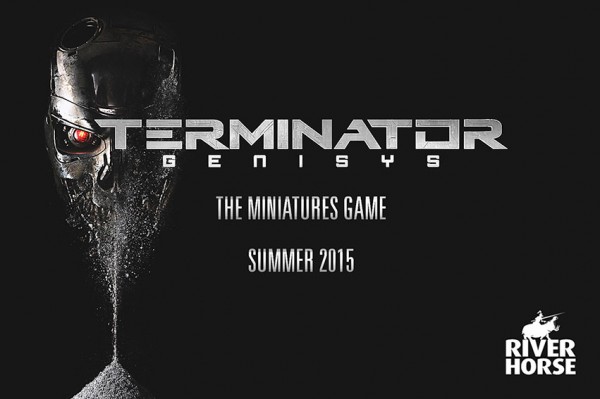
Terminator Genisys Miniatures Skirmish Game - Bolt Action Spin Off?

Well, well. Warlord ARE making waves.  They seem to have snagged the Terminator franchise for a miniatures game.

Produced by River Horse and written by Bolt Action author Alessio Cavatore, it will be a 28mm skirmish game pitting the Human Resistance led by John Connor against the Machines of Skynet.

The boxed set – War Against the Machines – is due for release in the Summer to coincide with the new movie…

Normally I don't do these lazy sort of "retweet" style posts on my blog, but I can't resist adding a few comments:

I'd like to bet, since this is an Alessio Cavatore rulebook, the game is EXACTLY the same as Bolt Action, only with some "special rules" for Terminators. 
(Oh well, at least it will allow for some interesting crossover games - T-800s vs Tiger tanks anyone?)

My second prediction - Games Workshop attempts to sue due to them infringing on their intellectual IP, for the use of the word "Terminator" and the minis' remarkable similarity to their Necron line.
 (My jesting irony may be lost, given GW's previous track record - remember the space marine (tm) incident?)

Thirdly, I bet they create extra "factions" in order to sell minis for them *sigh.*  These extra factions or non-canon units will invariably be OP and the most-used miniatures in the game.

And in case you missed the hype, here is Arnie, back in all his CGI glory.


Besides the inevitable "please don't suck" prayer, this movie inspires two questions:

(a) what is a "decent" time before you reboot a series?
(Amazing Spider Man was "too soon" after the first trilogy, it was made "on the rebound")

(b) what do you call the reboot of a reboot?

Sabtu, 13 Desember 2014

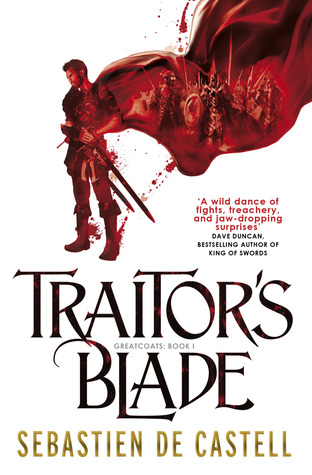
Traitor's Blade - Sebastian de Castell

Quite a few people have likened this to "Dumas meets Abercrombie" but I'd say it's closer to "Dumas meets Gemmell" - though I'm not sure which is a bigger compliment.

Basically, its a gritty fantasy Three Musketeers (there are even three main characters) following heroes who were once Greatcoaks, basically travelling magistrates-come-swordmasters who dispensed the king's justice in the corrupt dukedoms.

For some reason the cover reminds me of the videogame Dragon Age. 

That was in the past. Now the Musketeers Greatcoats are reviled as traitors, cowards who let their king die. Distrusted by the avaricious, grasping usurper Dukes, they live as sell-swords - and when the story begins, they have just been framed for murder.  The novel follows the leader of the Greatcoats, Falcio val Monde, both in the current timeline, and in telling the story of how the Greatcoats came to be.

The story had witty swashbuckler-style banter, and Joe Abercrombie-style quotable lines:

"The first rule of  the sword - put the pointy end in the other man"

It's fantasy, but magic doesn't play a major role.  There's some sorts of paralysing powers used by ninja-style assassins, fae horses (which I did find a bit jarring) and the odd bit of prophecy. I was a bit annoyed by said magic horse, the healing prostitute/nun. Some of the young noblewomen were a bit precocious and a torturer started speaking like Tarzan. But in a book where 6 to 1 swordfights are the norm, I might be being a bit picky.  But there are demented evil villainesses, transcended sword saints, nude female assassins, duplicitous villains, fisticuffs and, of course, swashbuckling. With rapiers. Lots of it.

This book is fun. Whilst there are sad and dark moments, it's fun without being silly. Fun in the style of Retribution Falls.  The best debut novel I've read since Name of the Wind or the Musashi coming-of-age story Child of Vengeance.  If you'd like a more modern Three Musketeers, this Is the droid book you've been waiting for.

Bernard Cornwall - Saxon Chronicles - Gaming Inspiration

I recently reread the entire series after the recent release of The Empty Throne (book #8), and that is indeed why boxes of Saxon Thegns, Viking Herdman and Dark Ages Peasants are winging their way (free postage, whoopee!) from Warlord UK.

Bernard Cornwall is solely to blame for why I spent $100 on GB Plastics from Warlord. That's the story I told my wife, and I'm sticking to it.

Bernard Cornwall is probably THE premier writer of historical fiction alive,and I doubt there's many guys over a certain age who aren't aware of his Napoleonic Sharpe series.  Though I enjoyed the TV series (Spoiler: Sean Bean is the hero and he DOES NOT die, for once!) I've only read a handful of the two dozen Sharpe books, and (heresy to some) I regard it (along with the ACW Starbuck Chronicles) as his least strong work, with some rather "by the numbers" writing at times.

Not so his Saxon Chronicles series. Beginning with The Last Kingdom they detail the adventures of Uhtred, a dispossessed Saxon, raised by Danes, who ends up fighting for King Alfred the Great.  Uhtred retells the stories in his old age, and his wry awareness of his youthful arrogance, violence and stupidity (mixed with a certain low cunning) make him a surprisingly likeable character.  The stories are interesting, with historic battles woven thoughout Uhtred's life, and the battle scenes are excellent. It seamlessly blends personal narrative with the sweep and scope of major events and battles, and gives a good "feel"for the time.  In an era when writers seem to compete to turn out bloated 800+ page books, the Saxon series are excellent compact storytelling of airport-novel size.  In addition, the small-scale skirmishes and raids that permeate the series make for excellent gaming material, be it for Saga, Pig Wars (which has recently been released on Wargames Vault - I have a review pending), or a LOTR:SBG hybrid.

I find it ironic that it's cheaper for me to buy GB Plastics from Warlord than their own website.
$35 for a 44-man box works out at ~80c for a figure - that's about the same as most 15mm metals.

This series has converted me into a full-blown Cornwall fan and I have since enjoyed the Grail series (100 Years War) and the Warlord (Arthurian) stories - the latter of which I intend to re-read, with an eye to the Two Fat Lardies Dux Brittannium ruleset.

That said, this is all about the Saxon series. If all you know of Cornwall is Sharpe, you're missing out on his best work. Even if you only have a passing interest in Saxons and Vikings, go out and grab these books.  Though they can be read in any order, starting with The Last Kingdom will allow you ot better appreciate the events and characters of later books as friendships, feuds and events can form threads through the series.

If The Last Kingdom TV series can match the Sharpe series it'll be very watchable.

Note: The Last Kingdom has started filming as a 8x60min BBC mini-series, in November.  The guys who do Downton Abbey will be making it, so it should have solid production values.  I just hope they don't skimp on the awesome battles from the books.