Minggu, 04 Januari 2015

Cleaning off the Hard Drive - Best & Worst PDF Rules

A follow up to my favourite rules list - but with PDFs this time. This time, dividing them into "zones"to make it less of a wall of text.  It's interesting to note how many of the good rules are available for free. 

FANTASY
Age of the Trebuchet/Legends of Feudal Times/Legends of the Middle Ages/Legends of Ancient Times & Legends of the Rising Sun (free)
Free LOTR:SBG mod for ancients/medieval/dark ages, and samurai.  A testament to how clean and adaptable the rules are.  Most have campaign advancement rules.

Battle Companies (free)
A cleaner Mordhiem-style campaign game for LoTR.  Officially published by GW, then withdrawn when they realized people were having too much fun with only $20 worth of miniatures.

Bloodbowl (free)
I made my own board and spent countless hours playing against myself, in a solo league, using plastic counters as players as I was too poor to afford the official models.  Awesome game.  

Mordhiem (free)
Somewhat unbalanced, complicated, and showing its age, but still the benchmark for campaign skirmish games.  I'd like to see an updated version with better activation (not IGOUGO!) and reactions.

CROM
A lighthearted, simple sword-and-sorcery skirmish game from the Age of Conan.  Uses an interesting dice pool - a mechanic I'd like to see more of.

Song of Blades & Heroes Unit Builder (free)
The most fun you can have with an Excel spreadsheet. Dig around in your shed and stat up random models to create zany warbands.

Bushido the Game (free)
I really like the rules, and dice pool mechanics.  But I do resist another "boutique" system which requires you to buy their miniatures to play.  Already got burned by Malifaux.   Add a custom unit builder and I'd be all over this one.  I'd even buy some of their minis - which are quite nice. 

HISTORICAL
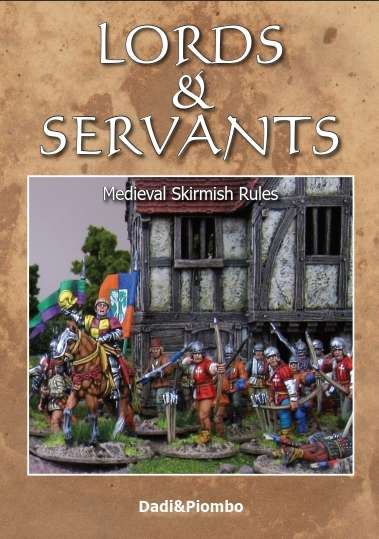
Lords & Servants
A very interesting "modern style" medieval skirmish ruleset, by the folk behind Impetus.  Reactions, action points etc.

Algernon Pulls It Off
Continues the juvenile TFL naming conventions, but the only WW1 flying game that isn't Wings of War, or based off a system from the 70s.

C21 Air War
An otherwise good, simple set of rules that criminally neglects energy management and altitude. I use it for ideas and the aircraft/weapon lists.

Bulldogs Away!
Modern strike craft fascinate me, and this is a good set of rules. A pity miniatures are both rare and expensive.

Battlefield: Miniature Modern Warfare
A tabletop wargame that mimics videogames? The irony is delicious.  Interesting ideas - I found it a little more complex than it initially appeared.

Dux Britannium
This skirmish campaign for Britons-v-Saxons has me keen to see TFL do something similar for broader periods such as generic medieval.  Do not read alongside Bernard Cornwall's Warlord series or a miniature purchase may occur.

Schnell Rules for Schnellboote (free)
These free coastal forces rules are ironically smoother and better than the published ones I own - probably because it resists getting bogged down in rivet counting. 

Damn Battleships Again (free)
Adapting DBA ancients rules to WW1 naval. A very different approach to the usual zillions-of-hitboxes approach. 

Coaling Stations
With a better shooting mechanic, these could be great. An interesting take on pre-dreadnought combat.

Red Sand, Blue Sky
I often pay out on 2HW, due to their supercilious fanboys, poorly presented rules, and dogged belief that one game system works for all genres and eras - but this is actually a good game. My #1 gladiator game, in a surprisingly crowded market.

SCIENCE FICTION


Infinity N3 Rules (free)
Infinity again - but who can resist a complete free rulebook, of a good, popular game system. Handy to keep on a laptop, and to print off quick-play sheets/important chunks of the rules.

Necromunda (free)
I never really liked the "gangers" and "underhive" thing but like Mordhiem, still a benchmark campaign skirmish game. A flashback from a happier era when Games Workshop had not yet turned to the dark side, and was about fun not just shareholder profit.

Railgun 2100 (free)
A sci fi spin-off of the excellent Fistful of Tows series.  This demo from 1998 desparately needs to be turned into a proper rulebook, with a good unit builder, and it would become THE benchmark for platoon/company+ sci fi.

Gruntz 15mm
This is a complete ripoff of Warmachine, but it is actually a good game. It's key strength is its use of neat unit cards and a robust unit builder that allows you to stat up 15mm minis from any manufacturer.  

5150: Fighter Command
The only noteworthy new fighter rules in a decade; I prefer them over Silent Death; they're simpler and allow for solo play, as well as a campaign.

Silent Death:TNM
The benchmark space fighter game - which either is a testament to its design, or the fact no one is making good space games any more.

Full Thrust (free)
The benchmark generic spaceship game.  Reigning by default due to bland and unimaginative rivals. (It's ironic that GW's now-defunct Battlefleet Gothic was the most exciting development in space gaming in recent memory).  Lends itself easily to house rules and different genres.

Star Cruiser 2300
I don't really play it, but their spaceships-as-submarines is a refreshing change from the spaceships-as-WW2-battleships everyone else does. StarCruiser Lite attempts to make it more playable.

Starmade Fleet Ops
Actually capable of handling groups of ships and finishing in a decent time.

Triplanetary (free)
Super simple boardgame, with the best true vector mechanic I have seen (I modified the theory behind it for my own house rules).

Renegade Legion: Interceptor (free)
Hideously complex fighter game but some good ideas in there. I used to borrow ideas out of it all the time. I'd like to see a simplified version. Kickstarter anyone?

Voidstriker
A lot of good ideas - the "theory" behind many mechanics are similar to my own house rules. Sadly falls into the "rivet counting, record keeping and hitboxes" trap.

FUBAR/Fast And Dirty (free)
The two free rulesets I recommend for generic sci fi.

In the Emperor's Name! (free)
Ideal for breathing new life into those 40K miniatures you've got lying around.  Essential if you liked the Eisenhorn & Ravenor series (some of the few decent Black Library books). 

Savage Worlds: Showdown (free)
The combat system from the RPG. Pretty much all you need to play a lot of cinematic skirmish genres. 
UNIVERSAL

Flux Battle Objectives
More scenario and mission ideas for $1.50 - yes please!


Two Fat Lardies "Christmas Specials" and "Compendiums" 
Chock full of scenarios, ideas, extra rules etc.  Aimed at TFL rule-books but a good read anyway.


I'm not actually deleting them, but couldn't resist the chance to take a swipe at...
Beyond the Gates of Antares (beta - free)
Another GW-rip off. Warlord is trying to nudge further into the GW gravy train.

Deadzone (beta - free)
I may get the set for the terrain, but it's missed the mark in trying to claim the Necromunda crown for Mantic.  From the stats it looks pretty hard to actually kill anyone. After Infinity, most sci fi skirmish games seem bland.

Naval Thunder
Bringing the joys of hull box ticking and record keeping found in the space rules, to the naval sphere.

Colonial Battlefleet
The exact same game as Naval Thunder, but with spaceships.  Wet navies in space again, yay.  Space game designers - please stop remaking inferior copies of Full Thrust. Look at the new mechanics other game genres (like skirmish) are using please, and try those. 

Gloire
Swashbuckling game that is so complicated you spend more time buckling than swashing.  Most RPGs run combat smoother.

Pike & Shot & Zombies
Zombies in the English Civil War? Royalists, Roundheads and undead? Yes please! Pity the rules are so clunky.   Mark me down as disappointed.

Aeronef
Love the setting and the fluff, and campaign add ons. Love the miniatures.  Hate the rules, which are simple but combine record keeping with a total lack of meaningful depth and tactical decisions.  With exploding d6s.

Any Age of Sail Game
Seriously. It must be the era.  I've tried FASB,  Flying Colours, Form Line of Battle, Grand Fleet Actions in the Age of Sail, It's Warm Work, and Kiss me Hardy. I think the designers are (a) all armchair naval historians first and rules designers a very distant second; and (b) have dedicated naval buff friends who like counting rivets and 5-hour games.   It pains me to say, the most playable is Games Workshop's Trafalgar, and I'm sure it is "unhistorical" enough to give your local navy buff a conniption.

---------------------------------------------------------------------------

Well, I'm sure there's a few I missed (I have a dozen new pdfs I've yet to fully playtest, some of which look quite promising) and remember, I'm ignoring over 100 "middle of the range" rules which are neither worth of particular praise nor bad enough to be singled out for ire.

Sabtu, 03 Januari 2015

(Review) Savage Worlds - Skirmish Gaming meets RPG

I'd like to dedicate this article to a very underrated and overlooked wargaming system.  Where Song of Blades and 2HW's offerings push their "one system for all genres" many ignore Savage Worlds, a skirmish system that has been around a lot longer. 

"But wait it isn't "overlooked" - isn't Savage Worlds a RPG?"
Yes, it is. A RPG that was based on a skirmish wargame, the Great Rail Wars, that was built to handle multiple squads.   That wargaming core remains - the RPGs just bolt more detail on the top.
So why would you pick Savage Worlds for wargaming?

The Explorer's Edition has all the core rules, and enough generic rules for a pulp/fantasy game. Great value at $10.
It's"Shinier"

Savage Worlds system books are (usually) produced and edited to a much higher standard than the usual indie (pdf/self published/Osprey) RPG-lite. The rules are more coherent.  And the base system (a steal at $10) is both half the price AND far better quality than your average 2HW book. 

It has better fluff
Most Savage World settings are backed with a mature background universe and history - the product of years (even decades) of RPG supplements.  They are usually written by experienced writers. Though not classic literature, the "fluff" is usually light years ahead of the generic, poorly written pap often found in typical wargames books.  They actually make you want to game in their universe.

If you like a narrative wargame, what better place to go than to the masters of narrative - the RPG crowd?

Savage Worlds Explorer's Edition
I'm going to focus on this one, though I have quite a few setting books, as it contains the core rules.  Savage Worlds tends to focus on weird war/pulp/fantasy settings. The Explorer's Edition is a 160-page toolkit that gives you the basics to game these settings - so you're kinda getting 2-3 rulebooks in one.   If you want more detail and the fluff for a specific setting, there will be a sourcebook available. 

The sourcebooks are usually big glossy hardbacks that tend to have hefty postage that places them in the $35-$60 range for an Aussie like me.  Luckily most are available as pdfs. 

The Shiny
Probably the best value-for-money rules I own.  At a mere $10, the glossy, colourful A5 softcover is cheaper than most B&W pdfs, and of a quality on a par with most $30+ rules. I particularly like the "quick reference" page at the end of each section which gives you an "at a glance" summary of the chapter.
There is a "quick reference" summary at the end of each chapter; I wish more rules would use this

Stats & Unit Builder
There are 5 stats, arranged in a way that shows its RPG focus.  
Agility
Smarts (quickness of thought, awareness)
Spirit (wisdom, willpower)
Strength
Vigor (stamina, damage)
The dice can also be shared amongst skills. Many -  Fighting, Shooting, Parry, Toughness - are likely to be more important for wargaming than the actual base stats. Naturally there is a "advancement" system for levelling up (it IS a RPG after all) but it's pretty basic

Savage Worlds contains a complete unit builder for giving stats to any random creature, though they are not competitively balanced i.e. a units can have almost any skill and they are valued equally, i.e. "Fighting" is usually far more useful than "Charisma" in a wargame.  There are lots of skills, abilities ("edges") etc as you'd expect from RPG, with a definite pulp flavour. What I like - on p.40-41 the special rules are all listed as a quick-reference chart with all the info you need "at a glance." 

Gear includes a selection of generic modern, medieval, black powder and futuristic armour and weapons, which again come with a quick-reference chart. A solid selection from flails and slings to rocket launchers, Claymore mines and laser rifles.

Game Mechanics
A deck of normal playing cards and various dice (d4, d6, d8, d10, d12, d20) are employed. 
For skills and abilities, the higher the dice, the better - as you roll the dice and need to pass 4 or more to succeed.  There is provision for opposed and co-operative rolls, and also rolling for groups. 

There is an "exploding dice" mechanic where any maximum throw (say a 8 on a d8) earns a re-roll.  Every 4 points you exceed your target roll gives you a "raise" - say you needed a 4 on a d12 and rolled a 8+ - then you would succeed and get a "raise." Raises add bonuses, like an extra damage in an attack.


Your heroes ("Wild Cards") get to roll an extra dice and choose the best one when making rolls.  There is even resource management - each player gets three "Bennies" (free re-rolls, or damage mitigation) and an additional two bennies for each Wild Card (hero) which they can spend each game. 

 Cheaper than a pdf, Savage Worlds has the production values of a $30+ rulebook

Initiative
Each turn, each unit or hero is dealt a card, and this determines the order they activate (i.e. Joker, Ace, King, Queen, and so on down to the deuce).  A unit can go on "hold" so it can act later in the turn. It must make an opposed roll using Agility to act before an opponent it is "interrupting."  A player with a Joker can use it to interrupt any move at any time, as well as gaining a +2 boost to rolls.

When a unit or hero is activated, it can take more than one action, but you have to -2 off all rolls for a second action, -4 for a third action, etc - if you wanted to fire a pistol with each hand, you'd be -2 to both rolls; if you wanted to fire the dual pistols whilst jumping a chasm, it'd be -4 to all rolls.

Movement
This is (usually) a free 6" action - there are rules for crawling, crouching, difficult going and jumping.  
Combat
Shooting and close combat is simply passing the 4+ (shooting) or the opponent's Parry skill (melee), with additional ranged penalties for long range and cover where appropriate. If you beat the requirements by +4 you get a "raise" (usually a +1d6 bonus to damage).   The attack then uses the strength of the wielder+weapon (melee) or weapon (ranged).
If it beats the opponent's toughness, the target is Shaken (can take no actions, can move only half speed - characters can attempt a recover roll next turn).
If the attack if it beats toughness with a raise (+4) - or scores a second Shaken the target is Wounded (and non-hero minions are out of action). Heroes can usually take 3 wounds - each wound is -1" to movement and dice rolls.  Incapacitated heroes with 0 wounds have extra effects like "bleeding out" or "stunned."  They may roll on an injury table after the game - possibly taking a hit to the "unmentionables" if they are really unlucky. 

There are rules for area attacks (scatter) and ways to target specific areas (i.e. shoot the eyeslits of a robot, or a tentacle off a monster). Players can also "defend" which adds to their Parry score. Players can dual wield, suppress with automatic weapons, go prone and make "all out attacks" which reduces their defence in favour of attacking bonuses. Targets can be grappled or disarmed - or finished off if they are helpless.   Units can also be taunted or intimidated - success means you get a +2 modifier next action against the loser.   The "bennies" resource can be used to soak up a level of damage.  Again, the combat section ends with a useful quick-reference page.

The sourcebooks add scenarios, creatures and special rules, along with inspirational fluff.

Magic/Arcane Arts
Magic is simple and follows the combat mechanics, but a magician has a finite amount (~10) of "magic points" to spend, and usually 2-3 spells.  Some spells can be "maintained" from turn to turn, but accrue -1 modifiers to any additional spells.  There are also "weird science" rules for crazed inventors.  There are about 30 spells in a decently descriptive collection covering everything from the usual fireballs and lightning bolts, to controlling animals, super speed and telekinesis. 


Extra Rules
More "scenario specific" rules like mounts, fear (quite detailed - would work for a horror setting), fatigue, hazards, heat, cold, poison, drowning, fire and falling (though falling probably should be in the "movement" section.) Add in radiation, hunger, thirst and lack of sleep - though most of this is RPG-centric.  The vehicle rules include collisions, jumping from vehicles and losing control, as well as fighting from/attacking vehicles, aircraft and watercraft (including age of sail).  While not particularly streamlined, the rules are quite comprehensive enough to cover the situations where vehicles appear in the game.  There are abstract rules for mass battles if you ever need to cover huge quantities of troops.

Monsters & Villains
There are some special "monstrous abilities" for creating monsters and undead, and a range of stats for mundane beasts like crocodiles, gorillas. wolves, snakes etc as well as more dragons, ghosts, vampires, zombies, ogres, giant spiders etc.  The mech profile reminds me I have yet to try a Warmachine game using the Savage Worlds engine. This is by no means an exhaustive list - more would be found in the setting-specific sourcebook, of course.

The source-books are good quality. The Solomon Kane book is my favourite. 

TL:DR
What Savage Worlds Explorer Edition does well:
+ Interesting card-based initiative sequence
+ Resource management ("bennies") for re-rolls and to soak damage
+ Ability to handle wide range of fantasy/pulp genres; a solid gaming "toolbox"
+ Cinematic action, with heroes and minions
+ Straightforward, consistent mechanics
+ A naturally solid "RPG-lite" - it's a RPG with a wargame "engine"
+ Can "interrupt" enemy turn
+ Sound weapon/gear list; ability to "stat up" random models
+ Plenty of decision making opportunities
+ Ability to "plug in" to a range of interesting source-books*
+ Easy to use, great value ($10) rulebook

Drawbacks:
- No scenarios in the base book; focus on RPG story > gaming
- Lacks historical accuracy
- Not competitively balanced
- Needs a source-book to get the most out of it, and for more monsters and beasts
- Lots of skills/special abilities; many not needed for a wargame
- Stats and skills of individual player (7+) is a bit excessive
- Uses lots of weird dice (d4, d8, d10, d12, d20)

Recommended: Yes.  A solid set of wargaming rules which plug into a wide and interesting range of sourcebooks.  Grab the cheap Explorer's Guide and maybe try a sourcebook or two on pdf to get started. 

*Some major settings include: 50 Fathoms (fantasy pirates); Rippers (VSF); Solomon Kane (pulp/17th century); Slipstream (pulp sci fi); Neccessary Evil (supervillains vs aliens), Space 1889 (VSF), Sundered Skies (sky galleons); Hellfrost (norse fantasy); Necropolis (sci fi knights vs undead); Interface Zero (cyberpunk); Totems of the Dead (sword and sorcery - and Indians), as well as Realms of Cthulhu (Achtung! Chulthu is the WWW2 spin-off). There are Weird War settings for WWW2 (I have a sourcebook en route), Vietnam(!) and Rome, as well as the Weird West Deadlands.   If you want bang for your buck, the fantasy, sci fi, horror and superpower "companion/toolkit" sourcebooks add broader genre specific critters and content.   I know there are heaps more Savage Worlds settings - I've only listed the more prominent/well supported ones. 

My Favorite Rule Books

Today I cleaned out my library, and re-arranged my rulebooks.  I found a few I forgot I owned.  Some I re-read.  Some inspired me to get painting miniatures.  Some I packed away in a box to stick in a dark corner of the shed.  As I sorted the "good", "bad" and the "ugly" I thought - if my wife made me trim down my collection - which ones would I keep, and what would I chuck?

I'll fight to keep these in the house....

Infinity the Game.  Great decision making that glosses over the annoying amount of special rules.  Amazing art and production values. Good mechanics, crying out for a simpler WW2/modern conversion and a decent campaign system. A great game that rises above its flaws.
 
LoTR:SBG+Battle Companies/Legends of High Seas/Old West/Gladiator.  A surprisingly subtle and underrated game engine. Clean design that gave birth to a range of skirmish campaign systems. Easy to learn, and easily adapted with house rules - samurai and medieval mods are also available.

Force on Force/Tomorrow's War.  Looks simpler and quicker to play than it is. Can "bog down" with all the reactions, counter-reactions.  Lots of rules explaining specific situations. Still the most interesting modern combat/near future sci fi games, for me, with lots of hard decision making. 

General Quarters I/II/III.  The first two books have a sensible amount of record keeping for a naval game. I'm currently fiddling with an aeronef adaption.

Battlestations! Battlestations!  For fleet level naval actions.  Good design philosophy, clean execution.

Bag the Hun/Check Your Six. Two very different aerial rules, for very different reasons.  BtH has a great activation system, but inconsistent game mechanics.  CY6 has good mechanics but annoying written orders. 

A Fistful of Tows 3.  A lot of good design ideas in this modern armoured warfare game. Would love to see a proper sci fi adaption with a simpler-to-use unit builder.  

Song of Blades/Song of Our Ancestors.  SoBH is like a box of LEGOs. You spend more time making warbands than actually playing the game.  SooA is a spin-off book for the wonderful world of the Quar. A whimsical, wonderful, coffee-table rulebook. 

Chain of Command.  The pre-game scouting phase is awesome. The emphasis on "Big Men" and spotting gives a real flavour to WW2 gaming.  I also like Sharpe Practice - pity I never play Napoleonics...

Secrets of the Third Reich. A weird war game that is very simple, yet still more realistic than Bolt Action. Great vehicle building rules for using DUST and MaK mecha as well as random 1:48 models.

Savage Worlds. The ultimate toolkit for cinematic RPG skirmish, plugs into some really cool settings (weird war/pulp/fantasy.)

DBA.  A triumph of simplicity and elegance.  The only mass battle ruleset I have minis based for.

Battlefleet Gothic.   I couldn't afford the models so I played with cut-outs made of ice-cream lids.  Stood out from the usual Full Thrust clones. Even had a campaign system.

Musket and Tomahawk.  SAGA's lesser known sibling.  Interesting blend of familiar and new ideas for French and Indian Wars.

Hind Commander. This helo game is unique, with both interesting game mechanics and its niche focus. I'd like to see more from this author.

Shipwreck! For proving not all modern naval games are gluggy and unpleasant book-keeping marathons.

Cutlass! A fantasy pirates skirmish game, with interesting activation and a deep campaign system.

Heavy Gear.  Another great concept DP9 managed to stuff up. Combined arms mech warfare pitched at the right level.  Not a bad ruleset, but core rules and errata confusingly scattered through several volumes, married to an overpriced miniatures line.  So much potential.

Lightning Strike.  I LOVE these rules.  Perfectly captures anime Gundam battles in space. A much tidier game than Heavy Gear. Pity that DP9 never bothered to make a proper line of miniatures for them.

HAVOC. Another set of rules I like but never play.  Great ideas, but terrible rules layout and lack of an army builder means it plays second fiddle to SoBH, despite it's superior gameplay. I look at this wistfully and think "if only." 

Battlefield Evo/Starship Troopers. A fascinating look at the way 40K could (and probably should) have progressed. The WW2 spin-off Victory Decision seems to have a small but devoted following.

Malifaux.  Overly complicated rules - plays like a bad CCG.   Excellent scenario generator rescues it from the shed.

Wings AT War.  No, not the one you're thinking of.  Aerial rules put out by Tumbling Dice.  An interesting series that focuses on energy management, but is very bare bones otherwise.

Fairy Meat. A game of 1:1 scale fairy combat between cannibalistic woodland sprites. Just because I enjoy the fact a wargame like this exists. Quite a good game, to boot.

ADDED: Dropzone Commander.  This has an excellent air-armour-infantry synergy - you need infantry to capture and hold objectives, but vehicles to get them there/interdict opponents.   Thought has gone into scenarios and use of terrain.

These go straight into the box in the shed...

Spinespur.  An overly complex skirmish game, with fluff including rape. Unpleasant AND bad.

Warhammer 40K.  5th edition? I've lost interest in the codex "arms race" a long time ago and GW's business practice slashed and burnt my remaining goodwill.

Warzone/Vor/Wargods of Aegyptus.   R.I.P.  They all died a long time ago. 

Flames of War.  Not interested in replicating all the faults of 40K in 15mm WW2.

Iron Ivan rules. (Coffin for 7 Brothers, Thrilling Tales, etc)  Not bad, just kinda bland.  Other rules do the same eras, only better.

Fields of Glory/DBM/Impetus.  Yawn. Zzzzzz.

GASLIGHT.  VSF toolbox that's OK, but very overrated by its fanboys. 

AE:WW2/AE:Bounty.  WWW2 and pulp sci fi skirmish rules that never took off. Restrictive warband choices and some weird design ideas.

Helldorado/Anima Tactics. Beautiful books, great production values, cool background/fluff - but overly complicated gameplay.

Future War Commander. I found the rules surprisingly inaccessible and how the anti tank/anti infantry dice worked didn't make sense.

Rapid Fire.  WW2 platoon level combat is a crowded market. It's probably my 6th choice rules for this genre. 

5150.  An early 2HW offering with typical (for the time) obscure layout and editing.

5150: Star Navy.  A space game so abstract you might as well remove minis altogether and randomly roll dice against each other.

Battletech. Anything with that much recording really should be a PC game. Wait, it is....

Star Fleet Battles.  Fun for accountants, maybe?

Dungeons & Dragons 4th Ed.  If people actually use this for any sort of miniatures gaming...  ...ugh. just ugh.  It's not even a good RPG.

War Rocket. The asymmetrical movement was vaguely interesting, but everything else wasn't.

Babylon 5: A Call to Arms. An exercise in meaningless dice chugging.

ADDED: Firestorm Armada.  It takes a particular skill to borrow so heavily from other games (Battlefleet Gothic in particular) and yet make a worse game.  You're meant to pick the good ideas! If you want to push spaceships into the middle of the table and chug handfuls of dice until someone wins, fine. The bad news is they used the same engine on all their other games.

Disclaimer:  There are about 80 other books which simply went into the "neutral cupboard"  and I'm excluding about 150 more pdfs. Also, the big clean up is not finished - I'll edit and add to this list as more come to light.

Jumat, 02 Januari 2015

(Review) Flux Battle Objectives - Generic Scenarios for Wargames

I think scenario design, like activation, is a neglected area of wargames rules - one of those things added almost as an afterthought by the rules designer.  I value my OOP copy of "Scenarios for Wargames" so I was intrigued by Flux Battle Objectives, a collection of generic game missions/objectives, available for the princely sum of $1.50.

The "overview" or "designer's notes" - also something I approve of,  says it aims to be system-agnostic and asymetrical - both players may have different objectives - a primary objective, a secondary objective, and a sub-plot - and may not be aware of their foes'  objectives.    The missions can be weighted with different values for a campaign, and allow players who cannot accomplish their primary objective to stay in the game.  Success for one army does not always mean automatic failure for another.

The Shiny
A two-column 18-page pdf.  For $1.50 I don't expect much shiny. Home-produced, but easy enough to read and use. 
At $1.50 from the Wargame Vault, Flux is a cheap source of scenario ideas.

Primary Objectives.  There are 11 primary objectives - already an improvement on the 4-8 available in most rulebooks.   The wording had a sci fi vibe (data theft etc) but it doesn't effect the scenarios - they can easily enough be renamed/adapted for other eras.  Most are pretty par for the course, though one mission "assembly point" is one I don't think I've seen before.  It is suggested the primary objective is selected by a random roll.

 Secondary Objectives.  These are not the "main" mission and can be selected by the player, a gamesmaster or the opposing player.  The 23 secondary choices are more specific and interesting - assassinate x unit, bait enemies into a certain area, hold y objective, rescue a prisoner, etc. 

Sub Plots.  The 22 sub-plots add a sense of story-telling and apply only usually to a specific unit in your army.  This could be useful in a campaign where success could grant a unit extra "XP" or chance of advancement.  The subplot is determined like a secondary objective.  This could include keeping an enemy unit alive ("double agent"), capturing a flag or even examining local flora with a medic or leader.  There are quite a few variations on the assassination theme.

TL:DR
A useful source of ideas for scenarios and at $1.50 you can't balk at the price.  A few thoughts:

*Many missions rely on plentiful buildings or terrain - a further argument for terrain in wargames. 
*I'm not sure how "playtested" the missions are
*Allowing you/opponents to choose secondary missions allows players to  play to their strengths. 
*Not really aimed at the competitive crowd
*Sub-plots be used to "level up" specific units
*Success for one army does not automatically mean failure for another
*Assign a rating to the primary, secondary missions etc means you have a reason to keep fighting
*Good for linked games (campaigns) - can assign say 10pts for a primary, 5pts for secondary etc.
*Some missions might clash with each other
*I noticed a few scenario ideas missing i.e. "ambush" etc - more primary scenarios would be good

Recommended?  Yes.
I've actually been borrowing Malifaux's similar primary missions+sub-plot system for many of my other skirmish games and Flux is a much much cheaper alternative.  More scenarios are always good to have in your gaming repertoire. 

Kamis, 25 Desember 2014

7th Voyage - 7TV Crooked Dice Game Review

I've been seeking a skirmish game to go with my newly-arrived Warlord Greeks.  I was thinking skirmish games, with a warband that could explore and do battle with various mythological monsters as well as human warbands, so Crooked Dice's 7th Voyage looked very interesting.  With my PayPal account bulging with birthday loot, I unhesitatingly pulled the trigger on the $60 (gulp) rulebook.  A good decision?

The Shiny
It's a well-presented 90-page hardback.  It's easy to read, with cartoon silhouette art and the odd miniature picture thrown in.  Kinda slender for the cost, but solid production values. A quick reference sheet, photocopyable templates and unit sheets and a range of creature/unit types in the appendix.  The game is meant to mimic TV shows, so the terminology uses "cast" for warband, and "stars and co-stars" instead of heroes. 

The artwork is similar inside. 
Mechanics
It uses the same action:engine mechanics used in other Crooked Diced games like their 7TV spy series.  Stats are extensive:
Move
Defence

Hit points
Strength
Agility
Intelligence
Morale
Attacks

Game Engine
The players roll a dice to see who starts first in the turn.  The difference in the dice becomes the audience appreciation score which is shared 50/50 between the players.

The audience appreciation is a resource which can be spent to add +1 to a dice roll, or extra activations. A simple form of resource management that adds interest to the game.

Units get activation tokens equal to half the models they have, rounding up.  So basically half your models can activate.  Once activated, a model can take two actions (like move, shoot, aim or melee). Some actions (like going prone) are free and do not count.

Players can also have a hand of three event cards which they can play at times to influence the action - usually to give extra cinematic events and drama to the battle.  

Except for activation, the rules are pretty simple and generic.

Movement
Nothing new here. Units move their "Move" stat - or 1d6" if in tough terrain/jumping.   Charging models get a melee bonus.  There are rules for climbing (and naturally, falling), swimming, and dragging other models.

Combat
Minis roll to hit, i.e. 5+ on d6, or whatever their skill dictates. Identical to games like LoTR - simple and familiar. Melee works the same - roll a d6 and score say a 4+ to hit. Units can roll an extra dice but their enemy gains a free counter attack.  Super simple and both sets of rules are a paragraph each.  Quite a few modifiers though. I will probably sound a bit snobbish when I say these are similar to a rule-set I wrote when I was 12 years old.  Oh, you can choose to push models back or knock them down, but I can't imagine that many circumstances where I would prefer to do so. 

To check if a model is wounded, you roll on a table which indexes the attackers' strength and the defender's defence.  I'm not sure if this chart is identical to the ones used for 40K/WFB/LoTR, but I wouldn't bet against it.  Unarmed attacks usually stun rather than wound the enemy, and you can capture foes instead of killing them.

There is a roll you can make to perform special actions (like pull a lever) and morale rules which are similar to the usual i.e. test if you have isolated minis, have lost half your models, or you face an enemy that causes fear.  There is a victory point table for defining the margin of victory.

Magic
Models get a magic pool of d6 which they can spend in their turn.  You can choose a number of d6s from the pool, and add this to your Intelligence stat.  If it equals or beats the difficulty of the spell you succeed.   Summoned creatures must be purchased at the start of the game, but require a successful spell to bring onto the table (and can be banished off it as well.)  If models have "Luck" they can spend it to re-roll dice.

Weapons
There is a solid list of 28 melee and missile weapons that cover everything you need - spears, clubs, swords, daggers, bows, slings etc. Even tails and tentacles.  These have a "strength", range, cost and special effects, like parry and thrust.

Special Effects
These are the usual special rules, traits and abilities.  There are 44 (69 if you count the monsterous and otherworldly traits). Some cover areas like combat, knowledge, physical traits - and may include disadvantages like slow or weak willed. Plenty of descriptive traits, and explained clearly enough.

I'm a sucker for pictures of miniatures in game
Unit Creation
There are a bunch of archetypes.  Each group has a star or co-star. You can amend their stats and abilities to an extent, as well as weapons. spells and equipment.  Not a true "create your own character" from scratch like Song of Blades and Heroes, but quite customizable. 
Dashing rogues, favoured champions, wise elders and enchanting beauties, deadly assassins, vile tyrants and brutish bodyguards - there's quite a bit to choose from, though I'd have preferred a bit more freedom.  

The rules for "Extras"i.e. the non-hero grunts and minions, include a range of civilians, soldiers, sailors and monsters - covers most of the "generic" characters but may not cover all your needs.  Not a big deal, given I can't see 7th Voyage being played competitively - you can simply mod other similar characters or creatures.

Scenarios & Missions
Jason & the Golden Fleece, Gorgon, Sinbad's voyages, the Thief of Baghdad are missions with pre-made "casts."  The sides of good and evil can have a straight up fight, but there are scenarios you can dice for (battle, escape, race, skirmish, steal, assassinate) and there are also random terrain generators (though you'd have to own a wide range of terrain for these sorts of things to be useful.)
There is a list of magical items/costs and spells /difficulty, as well as a list of event cards. 

TL:DR
I think it suffers for its $60 price tag.  I look at it, look at the Song of Blades pdf for $8, and think "I could have had a spare $52 to buy miniatures."  It has no better rules or content than $18 Osprey books like In Her Majesty's Name, for more than triple the price. 

+ Simple, easy to pick up and play
+ Interesting activation - audience appreciation points is a good addition
+ Generally solid rules

- Very expensive for the content
- You feel like you could have written the combat rules yourself
- No "advancement"or "campaign" rules
- Unit builder is not as comprehensive as similar games

In fact, I've ordered the mythology-specific SoBH spin off by Osprey - Of Gods & Mortals ($18) - which will make for an interesting comparison when it arrives.  As it is, I regret the money I spent on 7th Voyage - it would have been O.K. for $20.  (The pdf is ~$22 but even that is a premium where most pdfs are ~$10; I'd expect a printed rulebook for that) EDIT: Review Of Gods & Mortals is here.

Recommended: Not really. Whilst there is nothing wrong with these rules, unless you really love the "we're pretending this is a TV show" vibe, or you like paying a premium for a hard-backed rule book, there's plenty of other games that do the exact same thing or better for much, much cheaper.    

Sabtu, 20 Desember 2014

Lords & Servants Medieval Skirmish - Rules Review - Dadi&Piombo

I'd currently earmarked LoTR:SBG + Age of the Trebuchet + Battle Companies for medieval/dark ages skirmish + campaigning but I pricked up my ears when I came across this.  A skirmish ruleset from the folks behind Impetus? Sounds interesting.

The Shiny
A $9, 39-page pdf with pictures of Perry and Fireforge minis scattered throughout.  I found the rules easy to read and understand - so much so I was worried I would explain too much of the rules in my review.  A 2 page quick-reference sheet included covers all the key info.   

Lords & Servants is a breath of fresh air in the medieval skirmish genre where Pig Wars (1989) and Chainmail (sometime B.C.) are still spoken of fondly.
Mechanics
Played on a 3x3 or 4x4' table, the minis have few stats:

AV = Activation value (cost to activate a mini)
C = Combat skill + morale combined
Weapon = as it sounds
Special Characteristics = any special rules/abilities

Initiative
Each player rolls 3d6. The total is their Action Points pool, and the winner goes first.  You can also keep up to 6AP aside for use in your opponents' turn. Most miniatures or groups can take only 3 actions, which include the usual - move, shoot, aim, reload etc.  This use of a  "order pool" adds interesting resource management.   Groups can move at the cost of a single figure + the leader i.e. a group of 5 AV2 troops + a AV2 leader would cost 4AP to move - 2 for the group and 2 for the leader.  Moved individually, they would cost 12AP - using leaders is thus optional but very attractive.

Movement
Units have a move distance for the first move (say 12cm) then one for subsequent moves (8cm) which is a bit unusual and reminds me of Infinity.  Groups in close order (touching bases) move slower.  Moving for all three activations is considered running and needs to be noted with a counter. There are AP costs for jumping obstacles, moving inside buildings, etc.  Units can fight in close order or open order - open order skirmishers can react by retreating away from charges in their opponents' turn but sometimes a bad roll will mean they get run down.

Ambushes
Forces have ambush markers depending on size which can be single figures or groups.  These markers are moved around the table, and revealed when the player decides or if spotted by an opponent. 

Shooting
Minis shoot into their front 180d. 2d6 is used - hitting on a 7 (effective range) but including ranges from close (5+) to extreme (13!+).  If a figure is running, in cover, or in plate armour, he gets to roll a 5+ "cover save" on a d6. You can aim your fire and reload for an AP cost.  For group fire, you roll 2d6 for the first figure, then add 1d6 each extra ones. I.e. 5 archers roll 6d6.  Let's say a 4,3,6,2,6,4 are rolled = 25.  A 7 is needed to hit at effective range.  The total (25) / to hit (7) = 3 hits.  A bit maths-y for some perhaps?

Units who are hit roll "saving throws" to avoid death - they survive on a 6+ (half naked peasant) down to 3+ (plate). Horses and riders can be hit separately.  Heroes and personalities can roll d6 and on a 4+ it can "sacrifice" a nearby figure within 5cm and have it hit instead.  Figures who survive a hit are Shaken. Shaken figures cannot act until they spend 2AP to recover (1AP if in range of a leader/standard.)

Reactive Fire
Units can perform opportunity fire as a reaction if they pass an AV Test (roll above the AV cost of their actions) i.e. an AV2 unit must roll 3 or more.  Units being charged can hold their fire until the last minute to make it more lethal but this is harder to do.  Only one action can be spent firing in reaction.

Melee
Minis roll 3d6 (+extra dice for modifiers).  They score hits according to the CV of their opponent. I.e. if you are fighting a CV5 foe you hit on each roll of 5+.  A weaker CV3 foe would be hit on 3+.  The most hits wins: 2 more hits = kills, 1 more hit the loser is pushed back 5cm and shaken.  You can have group fights of up to 4:1 with extra minis adding extra dice.

Players with shields, plate armour or weapons with better initiative can make players re-roll a dice. There are special rules like foot dodging cavalry charges and unseating riders with polearms, as well as group v group combat.  

Morale
Units have a MV - a points total made up of all its minis - ranked from 1 to a common soldier to 5 for the supreme leader.  Once 1/3 of the total MV is lost, roll a d6 against the unit's most common "C"value.  If the unit passes it can remain until it takes 50% losses.  A failure (or going past 50%) means the unit is removed. Basically, if a noble or leader gets cut down it impacts morale much more than a common soldier, and units do not fight to the last man.

Special Rules
It explains the leadership levels and bonuses of sergeants, men at arms, nobles etc.  There are a range of historically-grounded special abilities such as lethal, feared, fanatic, scout, skirmisher. Heroes have a discount AV cost of 1/1/1 and C6 allowing them to take lots of actions cheaply and be deadly to boot. 

Weapons
Quite a detailed list - differentiating between heavy and light crossbows, javelins, long and short spears as well as pikes.  Weapons have different "initiatives" allowing them to force opponents' re-rolls - it kinda shows the speed/reach/parrying of the weapon.  Weapons might also have special rules like pikes nullifying charging horse and allowing support from the 2nd and 3rd ranks; or the lethality of a warhammer, or how hand axes can be thrown.

Perry's plastic range is some of the best I've owned.  A range of poses with plenty of bits, easy to put together and sound value at $35AUD for 38 minis. In Australia, a similar quantity of LoTR/Hobbit minis (with less poses) from the same sculptor cost $139.... gotta love Games Workshop... no wonder GW refugees are flocking to historicals like FoW and Bolt Action...
 
Army Building/Deployment
You can play at several levels - 1 unit, 1 unit+support, and multiple unit games.  There were no example scenarios which I found a bit surprising, and a bit of a glaring omission. I was pleased to see a "points system" included (something many historical sets snootily decline to do) as well as army-building guidelines for making balanced "pick up"games.  Units tend to be around 5-12 minis each and have recommended quantities i.e.  1 leader, 0-1 banner, 4-12 spears.  Weapons and abilities have a points cost.  It all looks good so far but I'm kinda bracing myself for the inevitable fantasy mod (and the zillion special rules that will follow).   There are "army lists" for feudal, Mongol and WoTR armies and I'm sure there'll be a heap more on their forums etc shortly.

TL:DR
Activation dice and resource management, hidden movement, reactive fire, an army and unit builder allowing you to stat up models....  Three thumbs up! (OK, it's definitely time I played historical instead of sci fi).

Only thing I'd complain about is use of 2d6 and 3d6 rolls, and the add-buckets-of-d6-then-divide used when shooting. Swapping to a d10 might have simplified things.  Also, tracking which players have run, are shaken or have fired their weapons requires markers.  The record-keeping is thus a bit heavier than LoTR and the use of reactions, combined with the dice mechanics, makes the game slower. LoTR bogs at 50+ miniatures so the claims L&S can handle 60-80 seems a bit dubious. Also the lack of scenarios is surprising for a game of this genre.

I note there is a black-powder version called "Smooth and Rifled" which uses similar mechanics.  I might check it out when I finally paint up my French-Indian War models, as overall, this is quite an interesting rules set.

Recommended: Absolutely. Easy to understand, it modernizes medieval skirmish with resource management and reaction mechanics. If you like medieval warfare, go buy these rules.  As a result, I'm now putting my Perry WoTR minis to the top of my painting queue (it was a bit lame proxying with orcs). Stay posted for a proper AAR-with-pics.   However I'm not completely abandoning LoTR yet (it plays faster and simpler, and has easily-adapted campaign advancement options). Other newer rules options are Bashing the Bishop which I haven't tried but obviously continue TFL's rather juvenile naming conventions.

Jumat, 19 Desember 2014

Battletech: Alpha Strike Rules Review

"Alpha Strike" stems from the realisation that the way to make money is to sell lots of miniatures.  When a complete traditional Battletech "force" can be made up  a lance of four $10 minis, I can't see truckloads of minis being sold. 

Alpha Strike simplifies Battletech in order to cram more models on the tabletop. It even has its own new scale (cue groaning from Battletech fans who have already undergone several scale changes) which is half the size of the traditional mechs.  Since it is half the price ($5ea vs $10ea) but only uses 1/8th the volume of the metal, that's good business sense right there.  The same pewter is worth 400% more. 

However - and this is a big plus - mecha are roughly 1:285 scale which mean they should fit perfectly with any 6mm sci fi you might already have - like those from GZG/Brigade etc.  This is a major, major selling point for me as infantry and auxiliary vehicles are not available yet anyway.  It deviates from the usual Battletech hex grid and jumps firmly aboard the tabletop gaming wagon.

EDIT: Comparison pics suggest they look more like 1:700. They are half the height of regular minis, so maybe the regular size is 1:285? (I got rid of my BT minis but they were older ones so my scales might be out of whack?) 

The jump to 1:285 allows compatibility with the generic 6mm ranges which gives you great flexibility in making combined-arms forces. Minis are online only at Iron Wind Metals.

The super detailed mecha profiles from traditional Battletech (I think the latest iteration is called "Total War") are replaced by a fairly simple unit card.

Size
Move (in inches)
Skill (this is pilot skill and shows the "to hit number")
Damage (the damage in each range bracket - short, medium and long - depends on the weapons fit)
Overheat (this is how much extra damage a mech can do, in exchange for heat)
Armour (armour hitpoints total - there are no individual hit locations)
Structure (internal hitpoints - again, there are no individual hit locations)
Heat Scale (this only has 4 levels - 1,2,3, and Shutdown)
Special Abilities

Gameplay & Rules
Activation is done alternately, like traditional BT.  Mecha can move or jump.  Movement has typical modifiers for smooth or difficult terrain. Attacks and movement can be made underwater, in snow and ice, hazardous acid pools and industrial zones, jungle, magma, and mud.  There are advanced rules to leap, sprint, climb and evade attacks.   There are advanced environmental rules for wind (even tornadoes), earthquakes, gravity, darkness, and atmospheres ranked from very thick to vacuum. 

They can fire at any enemies within their arc.  They check range and roll to hit.  Ranges are short (0-6") medium (6-24") and long (24-42").  The "to hit" number is the pilots' skill - so if the firer's Skill level is 4 he needs a 4 or better on 2d6.  However there is likely to be modifiers for target speed, cover etc.  Purists will be pleased you can still perform charge and death-from-above (jumping) attacks. 

If damage from an attack goes into structure, a critical hit is rolled for.  Criticals are much simpler than original BT as they are for the entire mech rather than individual components such as arms, legs or torso. Hits to the rear add +1 damage.

Players can choose to "overheat" their mech before they attack, exchanging extra damage for heat.  Each extra damage adds one heat.  Heat levels remain the same - heat can only be reduced by not firing or standing in water. Units which use so much heat they "shutdown" cannot do anything for a full turn, after which their heat resets to 0.

Units can have "special abilities" such as CASE (can ignore ammo critical hits) or melee weapons (adds +1 damage to melee attacks), anti-missile systems (-1 to damage from attacks including missiles), HEAT (weapon applies heat to target as well as damage).

Aerospace rules are abstracted and movement occurs in four "zones" in a separate aerospace map. Aerospace craft can interact with ground targets, strafing and bombing them with a range of attack types. However there are also "concrete" rules to allow aerospace units to land and liftoff on the tabletop during missions. Troops can also be dropped from high or low altitudes.

There are rules for on and off-board artillery, as well as a range of artillery, bombs and autocannon rounds such as flak and tracer shells, NARC and TAG pods. There are also capital-class weapons that can be used at airborne and orbital targets.  ECM can be used to create a "bubble" to defeat enemy probes and command networks. Mines can be used to ambush enemy troops.

Battlefield intelligence allows hidden deployment, intitative bonuses and pre-plotted artillery.  There are building rules allowing them to be sued as cover - or reduced to rubble.  I particularly like the use of "blip" counters - units can be represented by blips until they are in line-of-sight and visual range.  There are extra rules for fire and smoke - weapon attacks can start fires which damage and heat up mechs, and smoke interferes with weapon fire. You can even field mega-size units like dropships on the battlefield.

As you can see, the rules are very comprehensive - they cover around ~100 pages.

Battletech mech design has always been very "hit-and-miss." For every good mech, there are some who look just plain uninspired.  Meet "Slenderman."
Campaign System
Players are either attacker or defender and their is a flowchart campaign, with who wins determining the next mission.  Each mission (there are 6) shows the % of your total force you can use and amount relative to opponent.  Players have a "Warchest"which acts like XP or influence in other games - you use it to measure victories and buy new toys.  Re-arm, repair and (yay) salvage are all included.

Fluff & Unit Cards
A considerable amount of page space is devoted to fluff (as expected with Battletech); with plenty of unit profiles and quick reference pages and charts making up the remainder of the rules.

TL:DR
An attempt to speed up and simplify BT to allow large forces on the table, for me, the best thing that came out of this was the 1:285 scale change which means it is compatible with many other sci fi lines.  On the other hand, the mech range is rather limited (about ~30 compared to the 100s from the usual catalogue) and to be honest, most mech designs from BT are rather crap, to be frank.

The rules themselves get rid off much of the book keeping that bogs down Battletech, but also remove all of its charm.  I want to blow off arms or legs in a mech game, dammit!  Weapons types are so abstract as to be meaningless. Battletech Alpha does achieve its goal - to allow us to use more models on the table - but could have been so much more.  It's still got too much record keeping to be a good mass battle game, and it has lost the classic Battletech gameplay depth.  If only they had more adventurous designers - who were willing to tear up the old mechanics.   At the very least, it would have been much more sensible to convert from a existing mass battle ruleset rather than trying to turn skirmish rules (meant for 4 mechs a side) into a strategic-level wargame.   However Battletech is a game all about tradition, with a very loyal, established fanbase, so I can see why they went the route they did.

Recommended:  Not really.  It is very comprehensive, and I admit it does its job - allows you to push more mechs around the table.  It speeds  things up, but loses its soul. More boldness in games design could have made this idea work, with more gameplay depth and a true "Battletech" feel.  As it is, it removes much record keeping, but also all the worthwhile features that would make me want to play it.